
Compliance automation software takes the manual work out of a security program, but Cybersecurity Maturity Model Certification (CMMC) is graded requirement by requirement, so the depth of a tool matters as much as its breadth.
This guide ranks five compliance automation software tools for CMMC and compares what each one actually automates, from evidence collection to System Security Plan (SSP) workflows, so a defense contractor or a consultant can match a tool to the program they run.
TL;DR
These are the five best CMMC compliance automation software in 2026:
- MotherBear
- Vanta
- Drata
- Secureframe
- Thoropass
What Is Compliance Automation Software?
Compliance automation software reduces manual compliance work through evidence collection, control tracking, monitoring, and reporting across multiple frameworks.
Some platforms automatically pull data from connected systems, while others focus on keeping requirements, evidence, and documentation organized for assessments.
That breadth is useful for CMMC, but not the whole story, since the assessment is graded requirement by requirement. The five tools below range from broad automation to purpose-built CMMC software.
5 Best CMMC Compliance Automation Software Tools
The tools range from a workspace built only for CMMC to broad automation platforms that treat it as one framework among many.
1. MotherBear
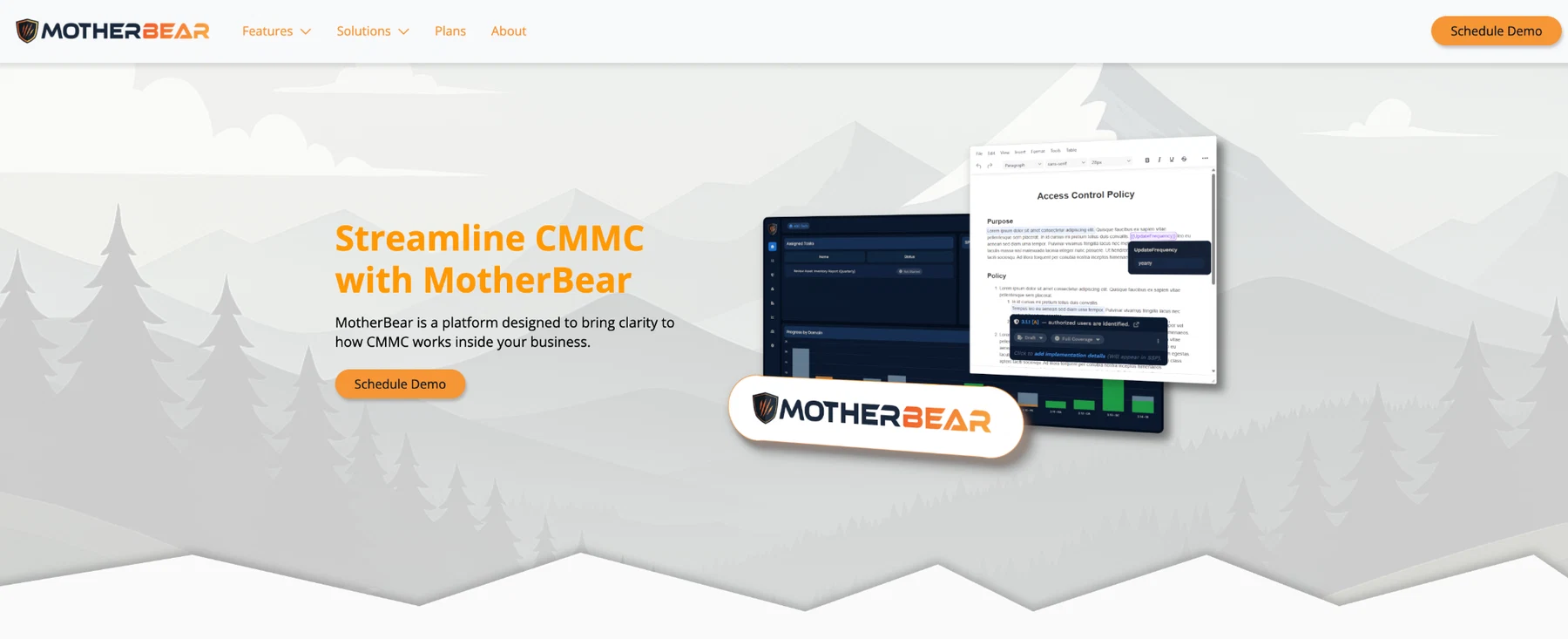
MotherBear is a CMMC and NIST 800-171 workspace built for defense contractors and the consultants who serve them. It is the only tool on this list made for CMMC alone.
It runs the CMMC program instead of testing controls from the outside. It tracks each requirement's status, maps evidence to the requirement it proves, keeps the documentation beside it, and turns gaps into owned tasks.
The status, the proof, and the written description for each of the 110 requirements stay together, down to the 320 objectives an assessor checks.
A contractor handling Federal Contract Information (FCI) or Controlled Unclassified Information (CUI) sees what is done and what is open, and a consultant keeps a separate program for every client in one place.
Key Features
- Central CMMC workspace: One place for the whole program, from scoping to assessment readiness.
- Requirement and evidence tracking: Every NIST 800-171 requirement shows a status, with its proof attached at the objective level.
- Documentation and remediation: The System Security Plan and policies stay with the controls, and open gaps become owned, dated tasks.
- Assessment readiness monitoring: A live view of where each program stands before a review.
- Multi-client organization: Separate programs per contractor in one workspace, for consultants running several.
Best for: Defense contractors whose main obligation is CMMC, and the consultants, Registered Practitioner Organizations (RPOs), and Managed Service Providers (MSPs) who run client programs.
Book a demo and watch MotherBear turn a CMMC program into tracked, provable work.
2. Vanta
Source: vanta.com
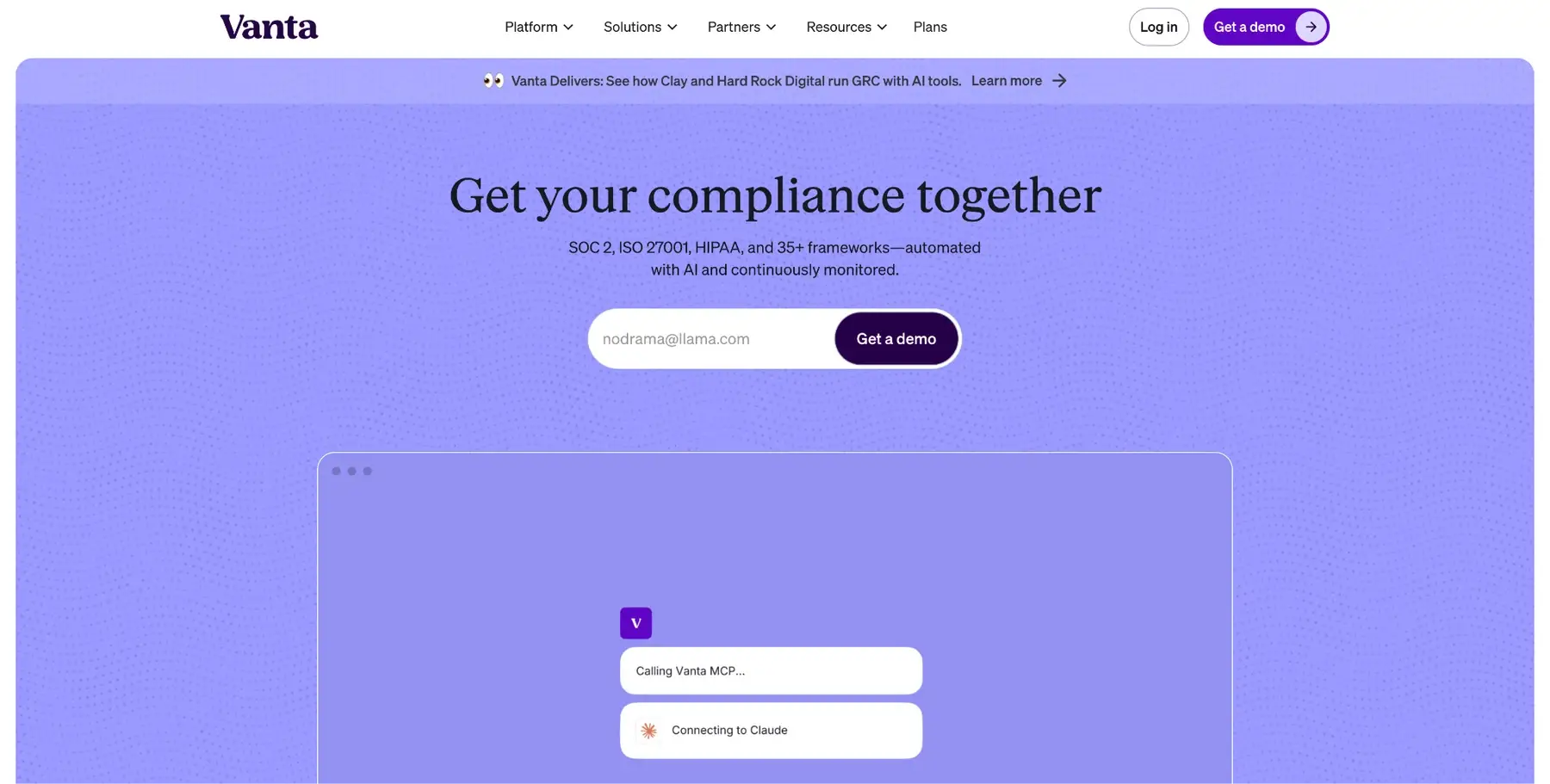
Vanta is the name most teams know in compliance automation. It links to over 400 tools, automates evidence for more than 35 frameworks, and layers on questionnaire automation, a Trust Center, and an AI-powered agent for daily compliance tasks.
For CMMC, Vanta offers NIST 800-171 mapping, System Security Plan generation, Plan of Action and Milestones (POA&M) templates, and Supplier Performance Risk System (SPRS) score tracking. Contractors still submit results themselves.
Since CMMC is one framework in a wide catalog, confirm how far those workflows reach into the 320 objectives, and note that some sit behind higher plan tiers.
Key Features
- Automated evidence collection: Integrations feed evidence and continuous control monitoring over many frameworks.
- Trust Center: Customers view compliance status in one shareable place.
- CMMC workflows: SSP generation, POA&M management, and SPRS score tracking.
Best for: Teams managing many frameworks at once.
3. Drata
Source: drata.com
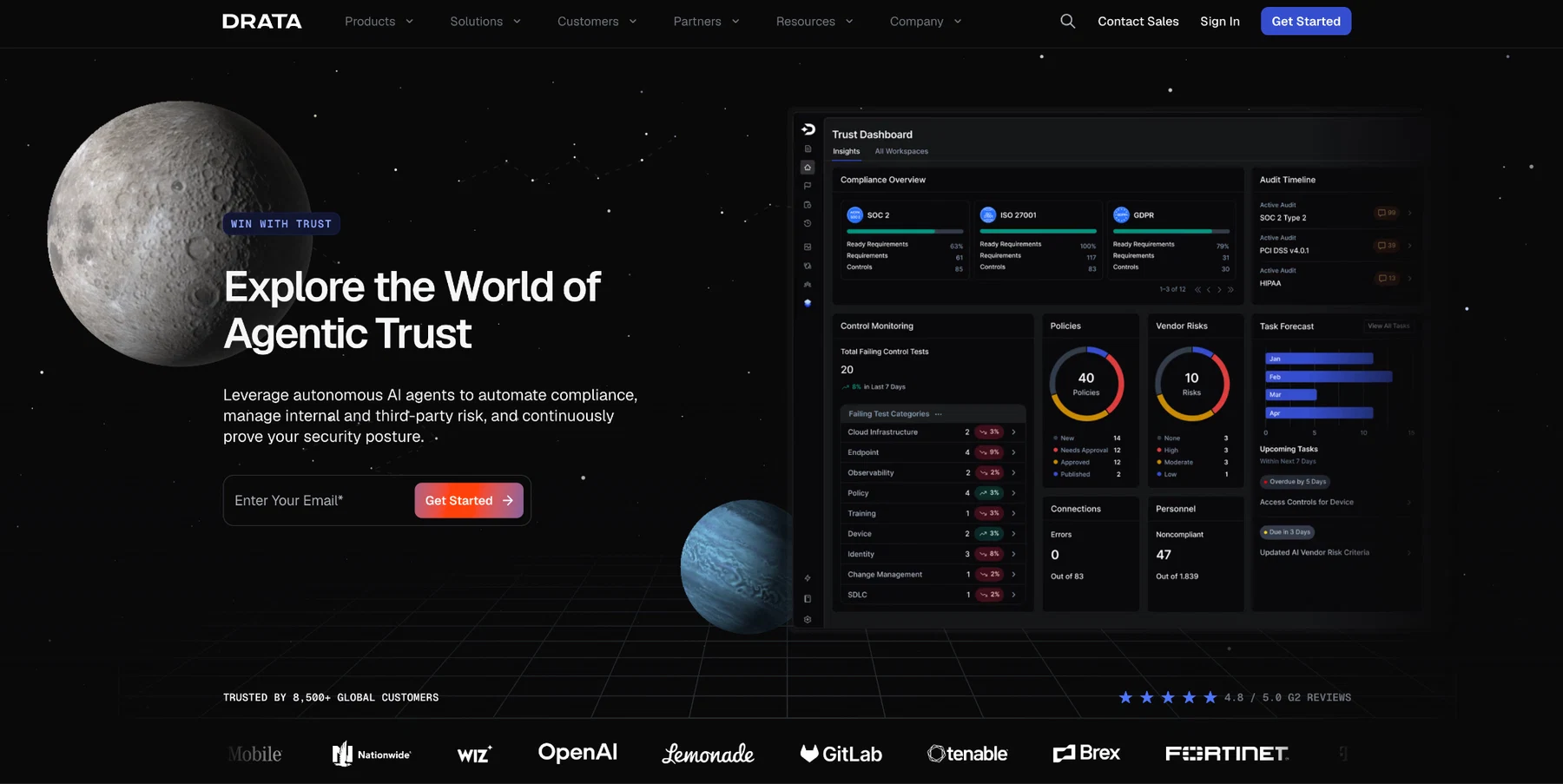
Drata leans toward governance and risk. Its platform combines continuous control monitoring with integrated and third-party risk management and a Trust Center, suited to teams managing both in one system.
Drata handles CMMC as a set of mapped controls with POA&M tracking. Its own material puts SPRS scoring outside the tool and treats the SSP as an uploaded artifact, so a defense buyer should check how each step behaves on the plan they would license.
Key Features
- Integrated risk management: Registers and scoring connect risks to controls and remediation.
- Automated control mapping: Requirements map to shared controls with named owners.
- POA&M tracking: Items carry ownership, status, and linked evidence.
Best for: Teams that want CMMC infrastructure, automation, and expert support together.
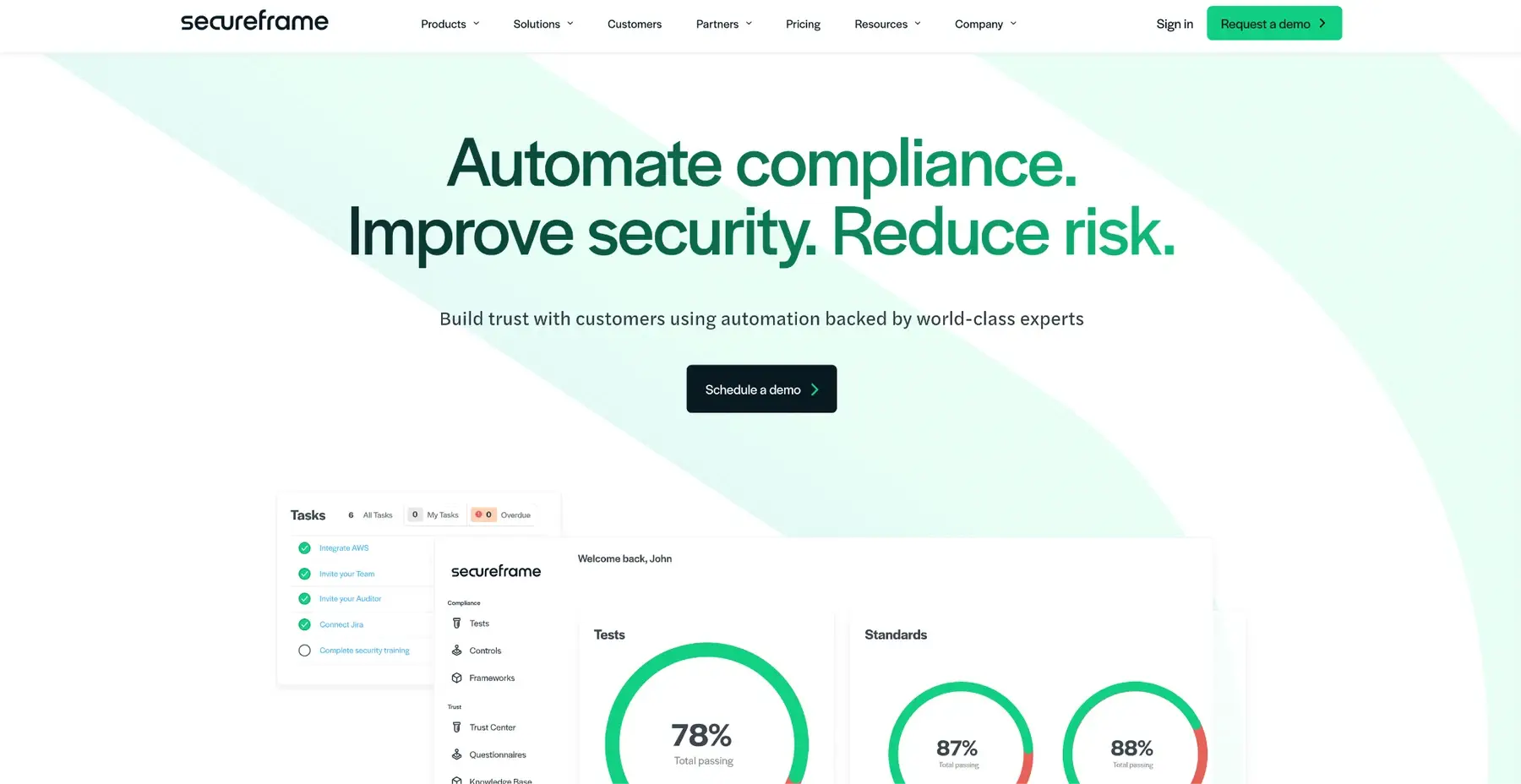
4. Secureframe
Source: secureframe.com
Secureframe pairs deep compliance automation with in-house experts. It supports frameworks such as System and Organization Controls 2 (SOC 2), International Organization for Standardization (ISO) 27001, and the Health Insurance Portability and Accountability Act (HIPAA), and former auditors support customers.
Secureframe Defense is its CMMC product, and it is substantial. It advertises automated cloud provisioning, guided CMMC scoping, automated SSP documentation, continuous evidence collection, and SPRS score tracking, with Registered Practitioner support and a Certified Third-Party Assessment Organization (C3PAO) partner network.
A multi-tenant portal also supports providers managing several contractors, so a consultant should weigh how the expert package fits a software-led program.
Key Features
- Secureframe Defense: Guided scoping, automated SSP, and continuous evidence collection.
- Expert support: In-house specialists work alongside the software.
- Multi-tenant portal: One portal manages several client programs.
Best for: Teams that want expert support with the software.
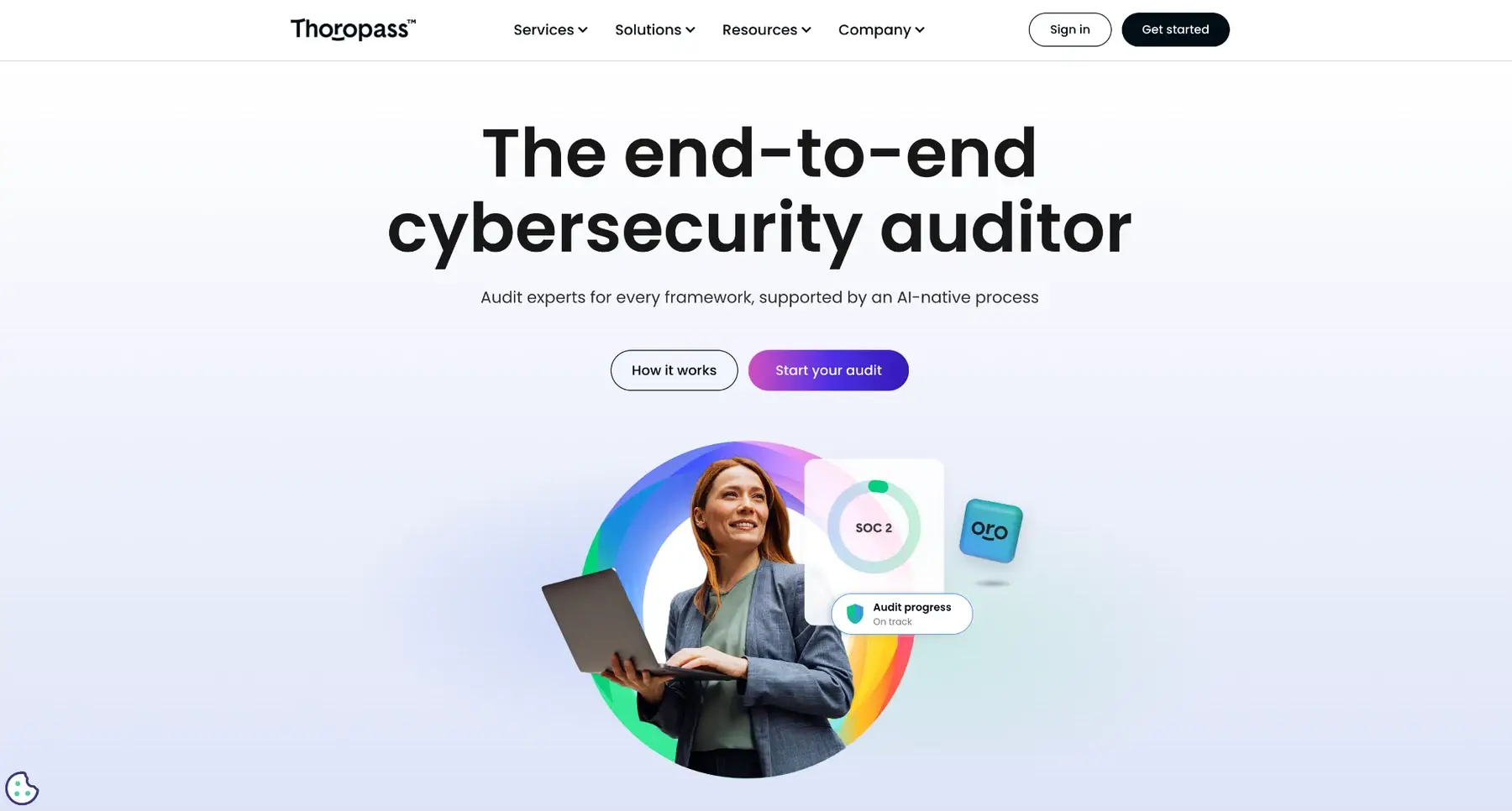
5. Thoropass
Source: thoropass.com
The outsider on this list is Thoropass, which combines compliance automation with an in-house audit arm. It maps controls over several frameworks, including NIST 800-171, SOC 2, and ISO 27001, so work done once can carry over.
Its CMMC approach is strongest at Level 1. Thoropass aligns with the Level 1 self-assessment, with control-mapped policies tied to NIST 800-171A objectives, evidence management that helps meet the six-year retention rule, and reminders for SPRS posting and annual affirmations.
Buyers should confirm which CMMC evidence can be collected through its integrations and which items still need manual upload. Its Level 1 page also still lists 17 practices where the current program uses 15 safeguards, so confirm the templates match the current count.
Key Features
- Guided Level 1 scoping: Walks teams through in-scope systems and assets.
- Control-mapped policies: Templates aligned to NIST 800-171A objectives.
- Cross-framework reuse: Controls map over NIST 800-171, SOC 2, and ISO 27001.
Best for: Level 1 and mixed multi-framework programs.
What to Look for in CMMC Compliance Automation Software
Compliance automation tools streamline complex compliance workflows by replacing repetitive tasks and manual processes with automated workflows.
Compared with manual compliance management, automated compliance management helps keep compliance processes current and flag issues that could contribute to compliance violations or audit failures.
For CMMC, a few capabilities separate a good fit from a generic one, so compliance teams and security teams should weigh each.
- Objective-level tracking: For Level 2, check coverage of all 110 requirements and 320 assessment objectives. The tool should connect compliance requirements to evidence and implementation status.
- Automated evidence collection: Pulling evidence from connected systems and running continuous compliance monitoring, or real-time compliance monitoring, cuts the manual effort of proving controls and reduces human error.
- Multi-framework coverage: Support for SOC 2, ISO 27001, and other compliance frameworks lets work carry over when a company runs more than CMMC.
- Risk and vendor management: Risk assessments, enterprise risk management, and third-party risk management often share the platform, so vendor risk management and compliance risks sit beside the controls.
- Reporting and audits: Generating audit-ready reports can streamline audits and reduce audit preparation. Check that compliance reports show compliance progress and compliance activities and support the audit process, audit workflows, and compliance assessments.
- Policy and control management: Policy management and automated control mapping keep security controls, compliance controls, and existing controls organized as regulations evolve, supporting enhanced data security.
The right compliance automation tools match the program you run, which for a defense contractor means CMMC depth over framework count, so compliance efforts land where they matter.
How to Choose CMMC Compliance Software
Start with how central CMMC is to your obligations. If it is one framework among several, a broad automation platform can make sense. If it is your main obligation, or you manage it for clients, a purpose-built tool carries the depth an assessment needs.
When managing multiple regulatory frameworks, check how automated workflows and ongoing monitoring track changes to regulatory requirements and industry regulations. Reports should distinguish compliance posture from security posture.
A CMMC-first team needs that same continuous monitoring and continuous audit readiness aimed at one assessment, which is where compliance management tools built for CMMC pull ahead and help a team manage compliance and maintain compliance between assessments.
For Level 2, check requirement and objective tracking, evidence links, and SSP, POA&M, and SPRS workflows. Ask which steps happen inside the product and which require external work.
Service model is the last piece. A team with no internal specialist may prefer a tool that bundles experts, while a consultancy that brings its own expertise wants a clean workspace for each client.
The wider set of CMMC compliance software covers general management platforms alongside these automation tools.
Put CMMC First With MotherBear
When a Department of Defense (DoD) contract names your CMMC requirements, the assessment looks at your program one requirement at a time. A tool built to automate many frameworks is organized around breadth, not around that review.
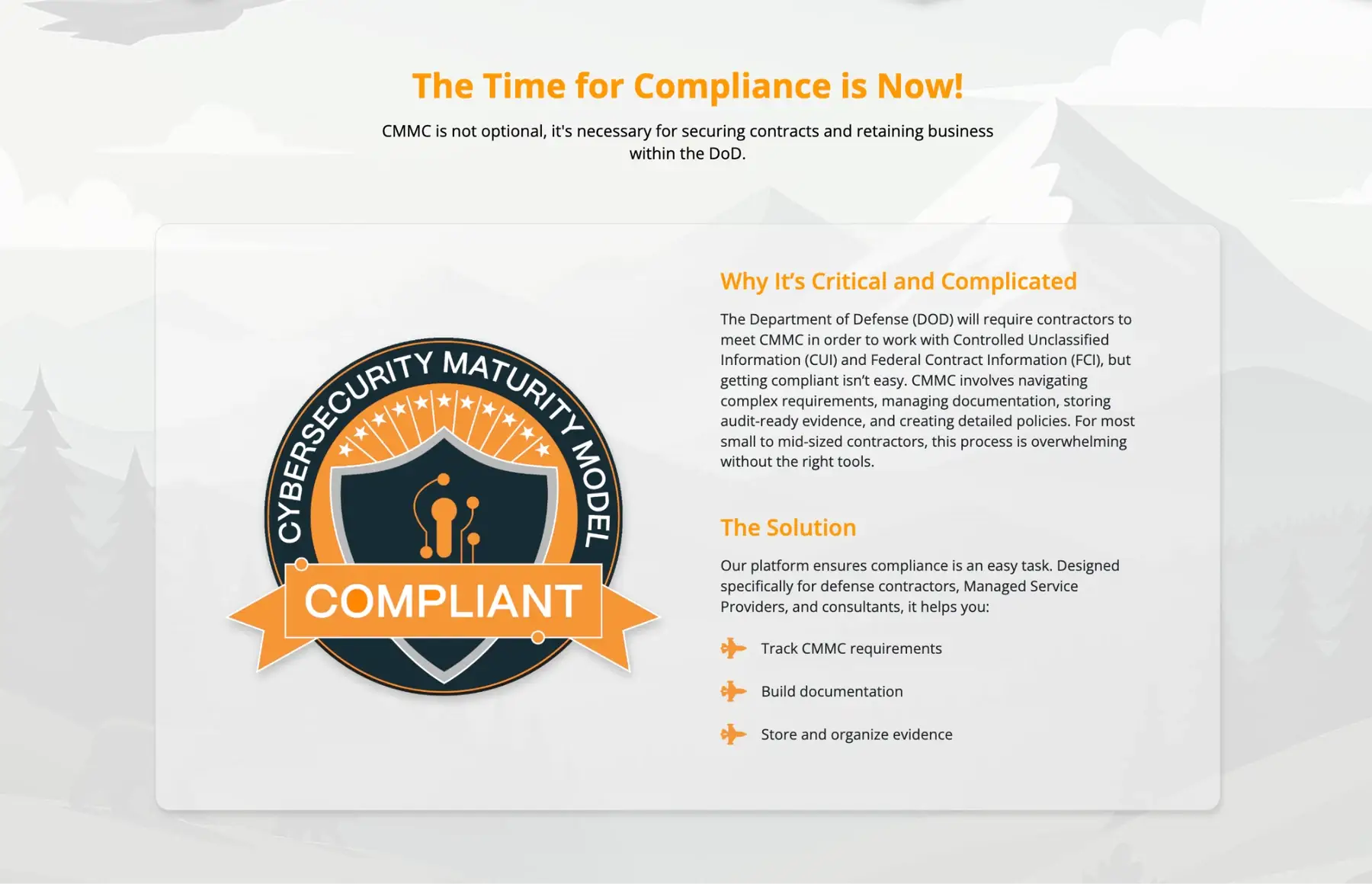
MotherBear pulls requirement status, evidence tied to each requirement, SSP and policy documentation, owned remediation tasks, and readiness monitoring into a single CMMC workspace, and a consultancy can run every client's program in that same place.
Book a demo and see how MotherBear keeps a CMMC-first program provable, requirement by requirement.
FAQs About CMMC Compliance Automation Software
What is compliance automation software?
Compliance automation software handles routine work automatically, such as collecting evidence, monitoring controls, and generating reports over one or more frameworks. It replaces manual tracking with a connected system.
For CMMC, it keeps requirements, evidence, and documentation organized, but it does not perform the assessment.
What are the benefits of compliance automation software for CMMC?
It reduces manual effort and human error by automating repetitive tasks a team would otherwise run by hand. For CMMC, it surfaces compliance gaps early and keeps evidence current, so a team can manage compliance and stay ready between assessments. It does not replace the assessment itself.
Can compliance automation software make you CMMC compliant?
No tool can make you compliant on its own. The requirements belong to your organization, and a Level 2 third-party assessment is performed only by an authorized C3PAO.
Software organizes the work, tracks status, and stores proof, which makes compliance easier to reach and to demonstrate.
What is the best compliance automation software for CMMC?
It depends on your main obligation. Vanta, Drata, and Secureframe support multiple frameworks. MotherBear focuses on CMMC and NIST 800-171 for defense contractors and consultants, with objective-level tracking and evidence linked to controls.