Table of Contents
If you're looking for NIST 800-171 compliance software, you've probably already hit the limits of spreadsheets, shared drives, and manual tracking.
At first, those tools may work.
But once you start collecting evidence, assigning tasks, updating documentation, managing Plans of Action and Milestones (POA&Ms), and preparing for reviews, things can get messy fast.
That's where dedicated compliance software helps.
The right platform gives your team one place to manage requirements, evidence, documentation, remediation work, and ongoing compliance activity while helping satisfy regulatory requirements.
Many organizations using these platforms handle Controlled Unclassified Information (CUI) and must comply with NIST 800-171 and Cybersecurity Maturity Model Certification (CMMC) requirements.
In this guide, we'll compare the best NIST 800-171 compliance software tools to help you choose the right fit for your organization.
TL;DR
These are the seven best NIST 800-171 compliance software tools:
- MotherBear
- Paramify
- FutureFeed
- IntelliGRC
- SMPL-C
- Cyturus
- Hyperproof
1. MotherBear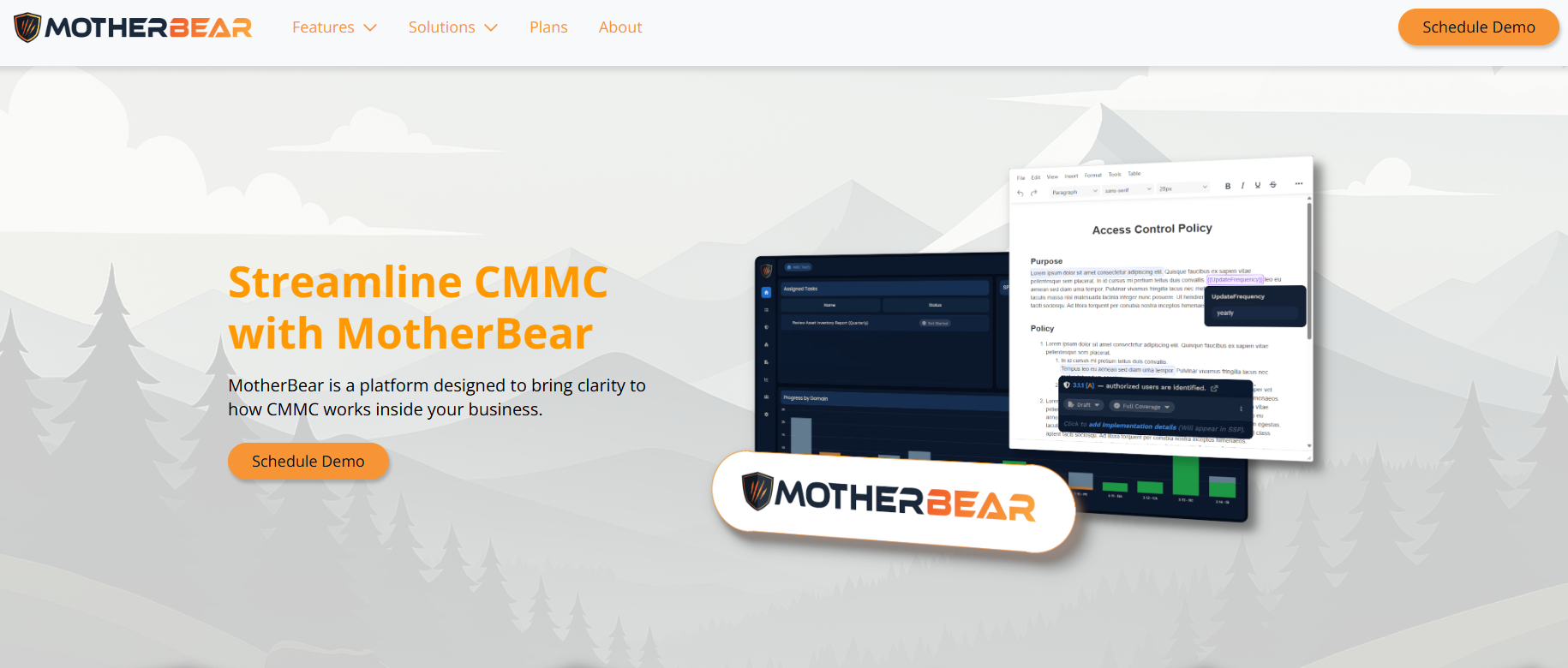
MotherBear is built around the way compliance work actually gets done.
Instead of forcing teams into a generic governance, risk, and compliance (GRC) process, it gives users a focused workspace for requirements, evidence, tasks, documentation, System Security Plans (SSPs), and POA&Ms.
That makes it ideal for teams that need more than a checklist.
For consultants, MotherBear’s multi-client support is one of its biggest advantages. It helps firms manage multiple client environments without jumping between separate spreadsheets, folders, and task boards.
For contractors, it provides a cleaner way to stay organized and maintain readiness over time.
MotherBear is the strongest option on this list for teams that want a purpose-built NIST 800-171 compliance software platform with practical CMMC workflows built in.
Key Features
- Centralized compliance workspace
- Evidence management
- SSP organization
- POA&M tracking
- Task management
- Requirements tracking
- Documentation management
- Implementation record tracking
- Multi-client support for consultants
- Long-term compliance management
Who Should Use It
MotherBear is a strong fit for organizations that want to move away from spreadsheets, shared folders, and disconnected project trackers.
It is especially useful for:
- Defense contractors managing their own compliance program
- Consultants managing multiple clients
- MSPs and vCISOs supporting contractor environments
- Teams that need better visibility into evidence, tasks, and documentation
- Organizations that want to maintain compliance over time, not just prepare for one assessment
2. Paramify
Source: paramify.com
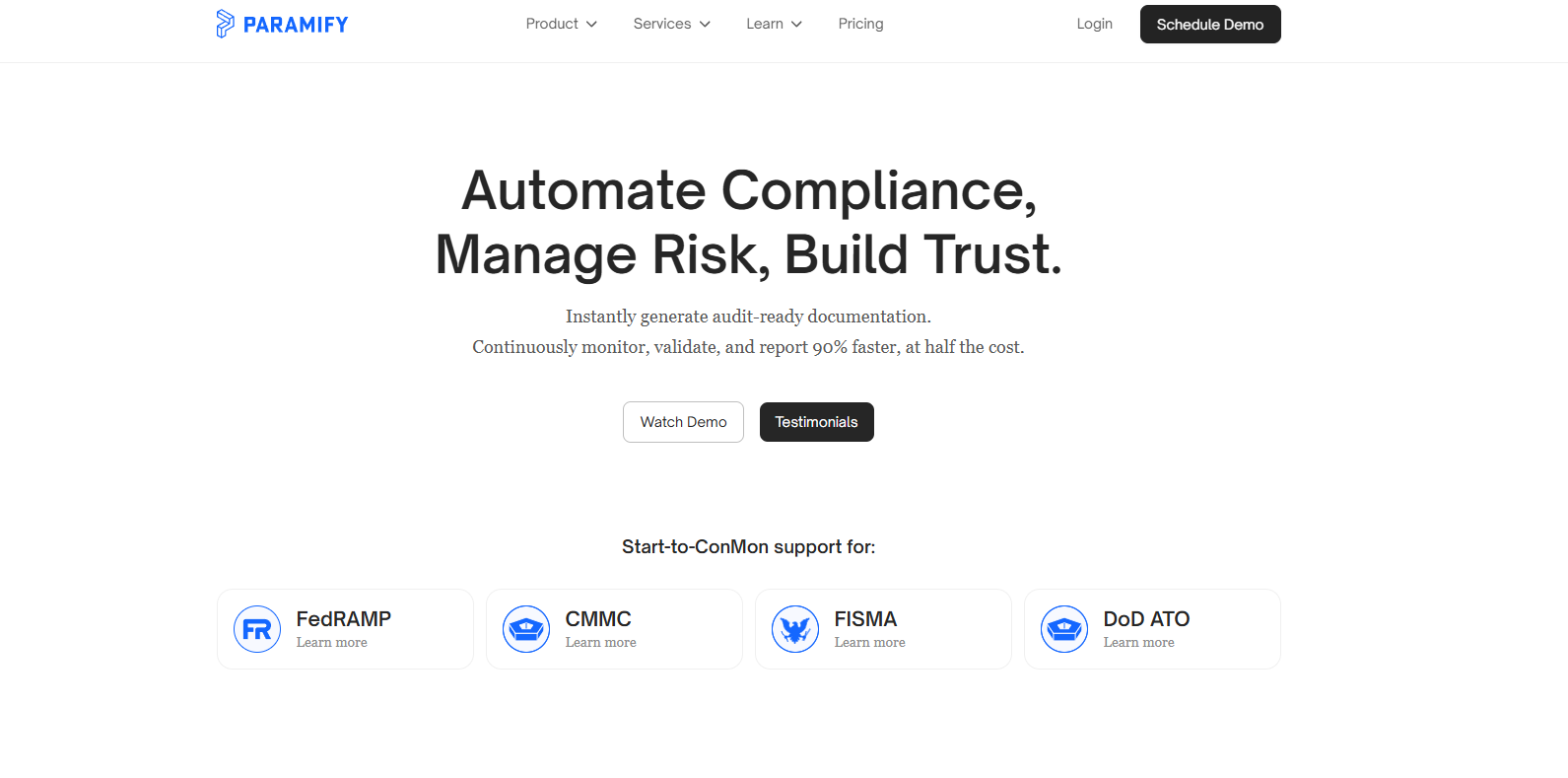
Paramify stands out for automation.
It can help teams reduce the time spent creating, updating, and managing compliance documentation.
This is useful for organizations that already know what they need to document but want a faster and more repeatable way to manage the process.
Paramify is a good fit for teams that want automation across several compliance programs, rather than a platform focused only on CMMC workflows.
Key Features
- Automated documentation workflows
- SSP generation
- POA&M management
- Control mapping
- OSCAL-based compliance documentation
Who Should Use It
Paramify is a good fit for teams that want a faster way to build and manage compliance documentation.
It works well for:
- Security teams
- Compliance teams
- Contractors with complex documentation needs
- Organizations working with multiple frameworks
- Teams that want automation to reduce manual writing and tracking
3. FutureFeed
Source: futurefeed.co
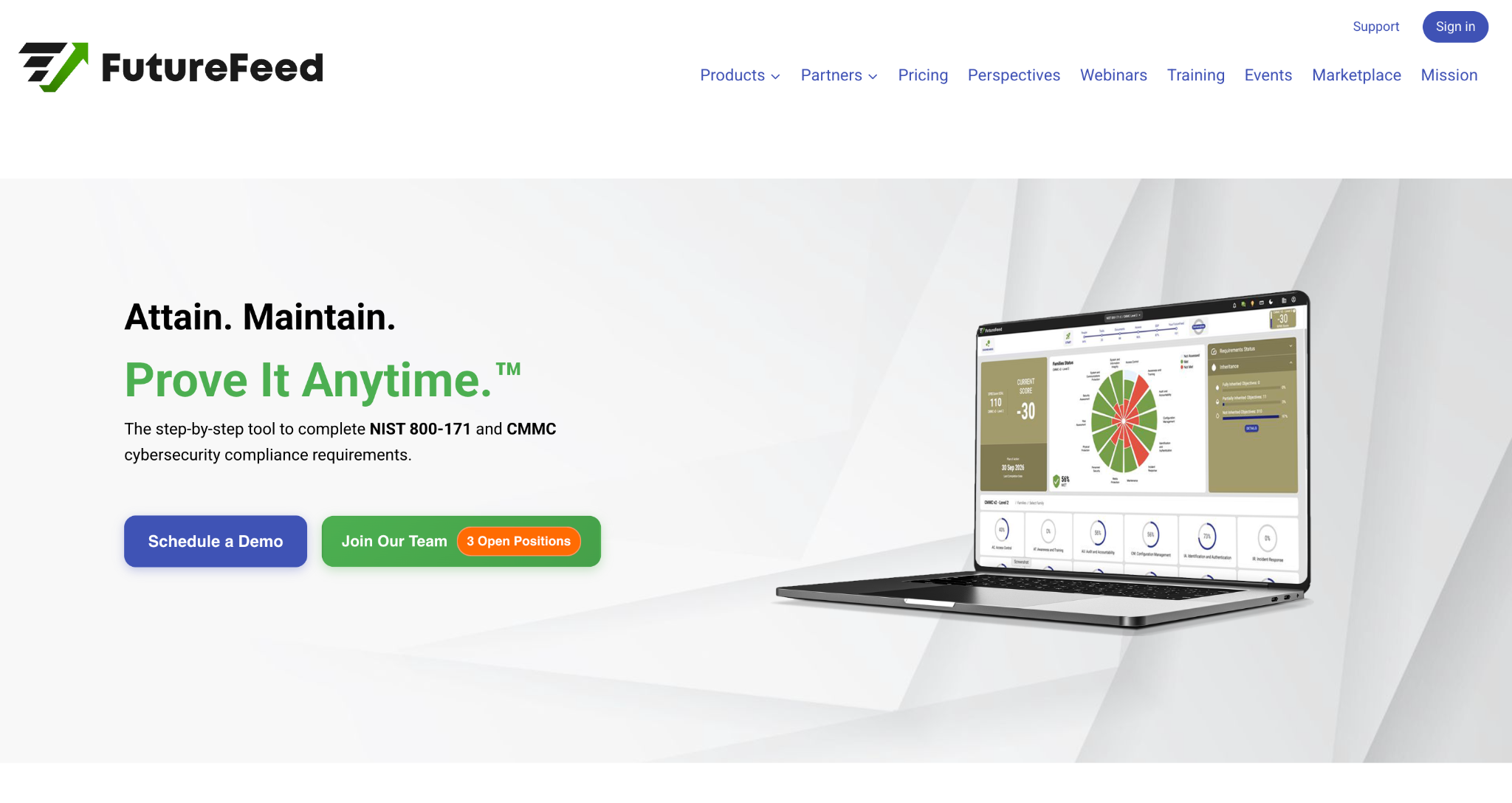
FutureFeed is built for organizations that want guidance throughout the compliance process.
The platform helps users move through requirements, documentation, evidence collection, and readiness activities in a structured way.
That makes it a practical option for contractors who want a more guided experience.
It’s helpful for teams that are newer to compliance software and want a platform that provides direction as they work.
Key Features
- Guided compliance workflows
- SSP management
- POA&M tracking
- Evidence collection
- Automated Supplier Performance Risk System (SPRS) score tracking
Who Should Use It
FutureFeed is a good option for organizations that want a step-by-step structure.
It’s a fit for:
- Small and mid-sized defense contractors
- Teams that want guided workflows
- Organizations that need help organizing documentation
- Contractors preparing for external reviews
- Teams that want a platform focused on defense compliance
4. IntelliGRC
Source: intelligrc.com
IntelliGRC is more of a traditional GRC platform.
That can be useful for organizations that need to manage many compliance, audit, and risk activities in one system.
It is a good fit if your organization already has mature governance processes, and you want a flexible platform to support them.
However, teams focused mainly on NIST 800-171 and CMMC may need more configuration than they would with a purpose-built platform.
Key Features
- Risk management
- Policy management
- Audit tracking
- Compliance workflows
- Reporting
- Control management
- Framework mapping
Who Should Use It
IntelliGRC is suited for teams that need more than NIST 800-171 compliance software.
It works well for:
- Larger companies
- Organizations managing several compliance frameworks
- Risk and governance teams
- Companies with formal audit programs
- Teams that want a configurable GRC system
5. SMPL-C
Source: smpl-c.com
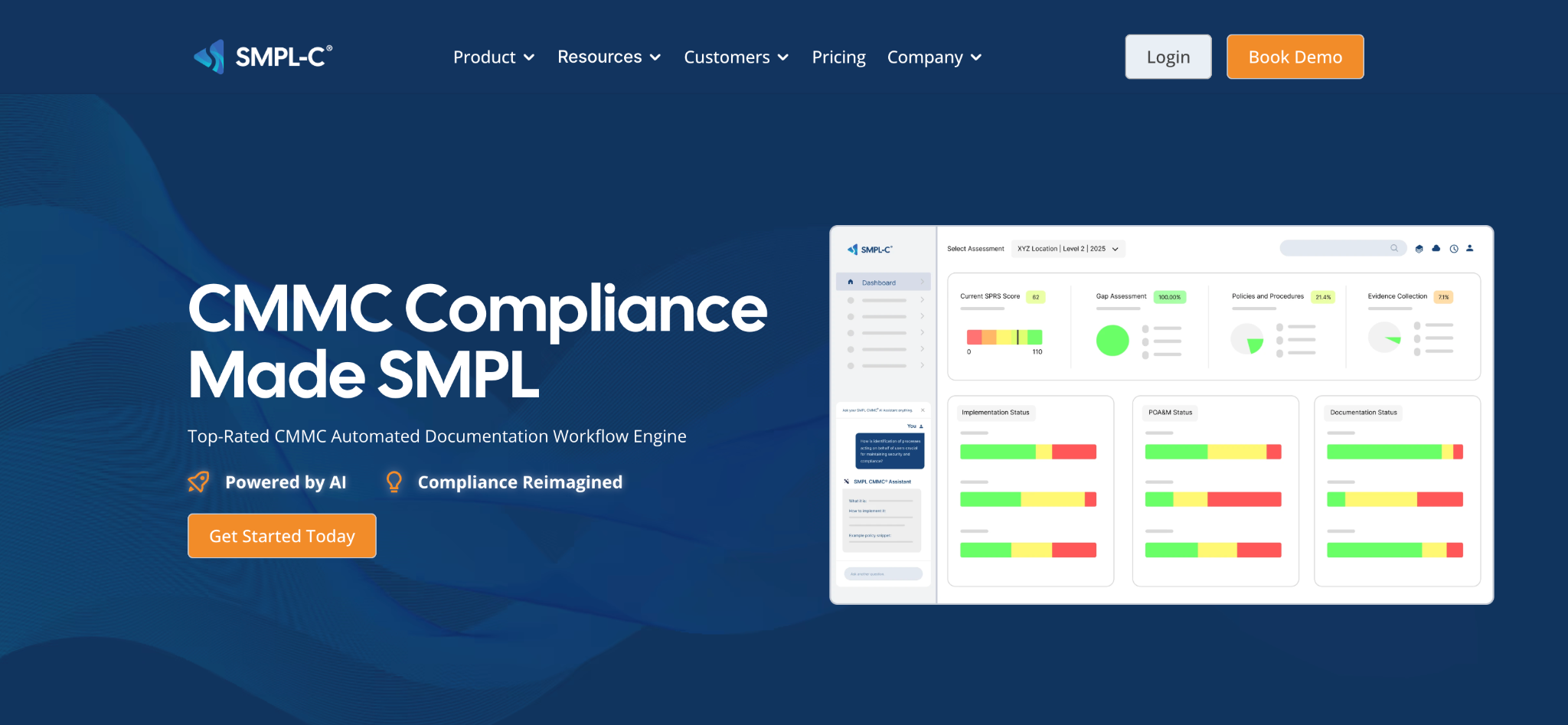
SMPL-C takes a more guided approach to CMMC compliance.
Its AI-assisted platform helps organizations review documentation, identify potential gaps, and manage compliance activities in a structured way. That makes it a practical option for contractors looking for a focused compliance tool without the complexity of a larger GRC platform.
Key Features
- CMMC-focused workflows
- SSP support
- POA&M tracking
- Documentation management
- AI-powered document analysis
Who Should Use It
SMPL-C is a good fit for organizations that want focused CMMC support without a heavy enterprise system.
It works well for:
- Smaller contractors
- Teams with limited compliance staff
- Organizations that want a simpler workflow
- Contractors who need help organizing documentation and tasks
- Companies that want a CMMC-specific structure
6. Cyturus
Source: cyturus.com
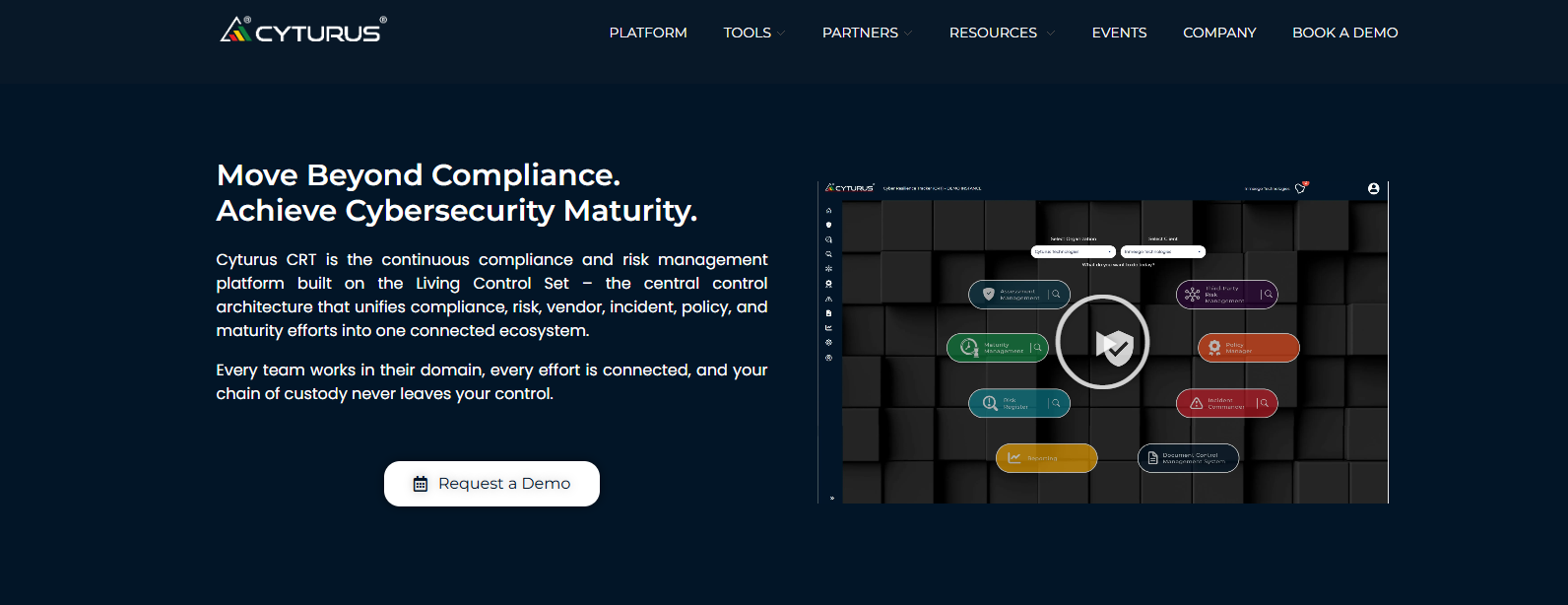
Cyturus is suitable for teams that want more structure around assessment readiness and risk.
The platform helps organizations track where they stand, identify gaps, and manage compliance activity over time.
It is a fit for organizations that want stronger reporting and maturity tracking alongside compliance management.
Key Features
- Risk management
- Assessment management
- Control mapping
- Evidence management
- Reporting
- Continuous compliance tracking
Who Should Use It
Cyturus is a good fit for teams that want to track readiness and manage compliance maturity.
It works well for:
- Contractors preparing for reviews
- Consulting teams
- Risk management teams
- Organizations that want assessment-focused workflows
- Companies that need control mapping and reporting
7. Hyperproof
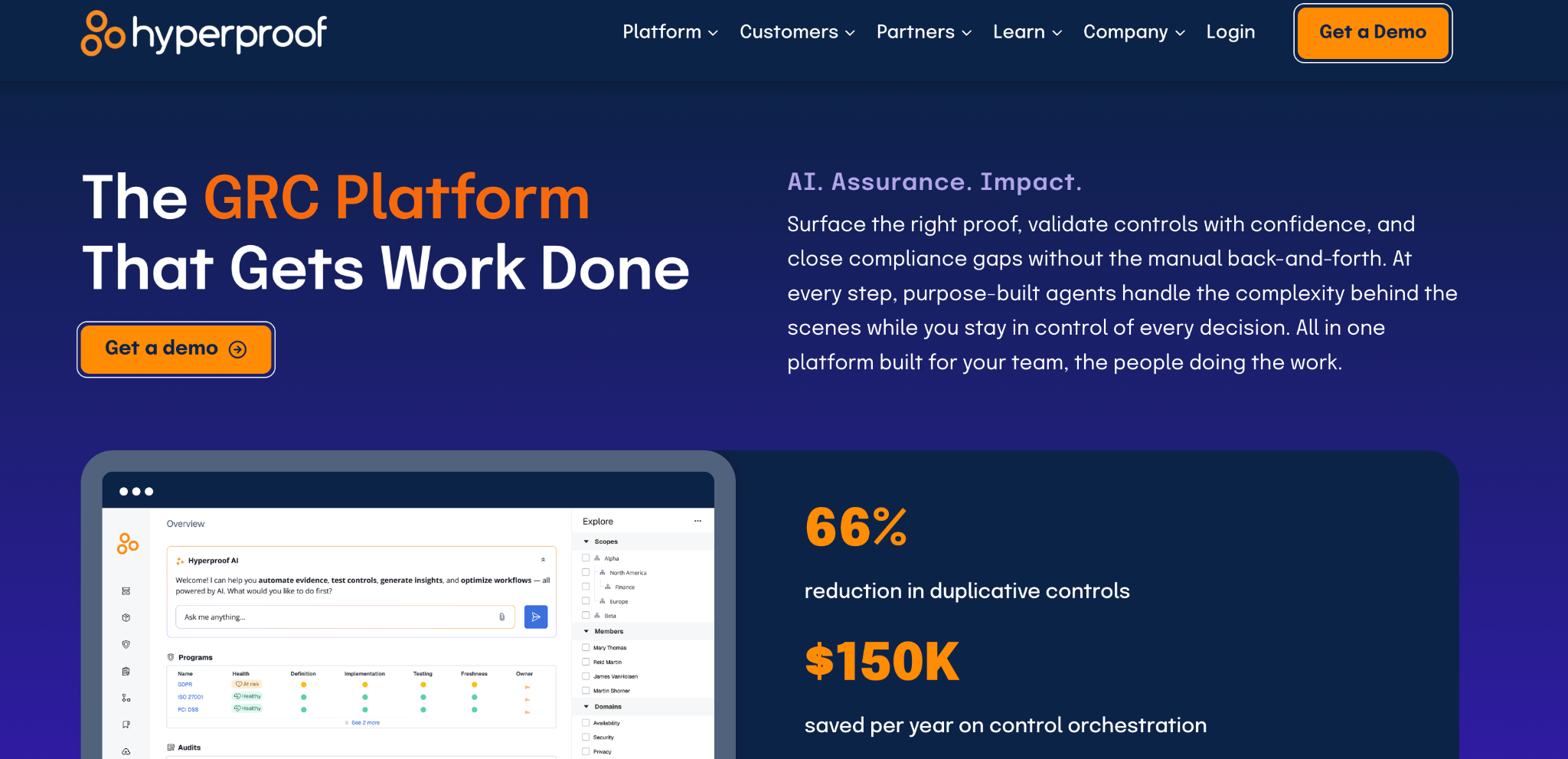
Source: hyperproof.io
Hyperproof is a strong option for organizations that manage several compliance frameworks at once.
It is not built only for defense contractors, but it can be useful for teams that need a broader compliance operations platform.
If your company needs to manage NIST 800-171 alongside other frameworks, Hyperproof may be worth evaluating. However, for teams focused mainly on CMMC workflows, a more purpose-built platform may be easier to use.
Key Features
- Compliance operations management
- Evidence collection
- Risk management
- Task tracking
- Framework mapping
- Audit preparation
- Integrations
- Reporting dashboards
Who Should Use It
Hyperproof is a good fit for companies that need broader compliance operations, not only NIST 800-171.
It works well for:
- Mid-market companies
- Enterprise compliance teams
- Organizations managing multiple frameworks
- Teams that need evidence automation
- Companies with mature compliance operations
What’s the Difference Between CMMC and NIST 800-171 Compliance Software?
You'll often see vendors use CMMC software and NIST 800-171 compliance software interchangeably because the two are closely connected.
NIST 800-171 establishes cybersecurity requirements that organizations must implement for protecting controlled unclassified information and other forms of sensitive data.
These requirements apply to many defense and prime contractors or subcontractors that support the federal government, operate within the defense industrial base, and work on sensitive government contracts.
The framework is designed to help protect information shared through nonfederal systems and federal information systems that support national security objectives.
The CMMC uses those same security controls as the basis for assessing compliance and determining whether organizations are prepared to handle controlled unclassified information.
Many organizations also use software to support activities such as evidence collection, documentation management, security assessment preparation, POA&M tracking, and SPRS score management.
Organizations preparing for CMMC Level 2 assessments also need to align with the Department of Defense (DoD) Assessment Methodology, which is used to evaluate the implementation of NIST 800-171 requirements and calculate SPRS scores.
In practice, most buyers need software that supports both NIST 800-171 compliance and CMMC readiness.
That means the best platforms usually help with:
- Evidence collection
- SSP management
- POA&M tracking
- Task assignments
- Documentation
- Control implementation
- Assessment readiness
- Ongoing compliance work
The main difference is how each platform approaches those workflows. Some tools are built specifically for defense contractors, while others are broader GRC platforms that require additional customization.
How to Choose NIST 800-171 Compliance Software
The best platform depends on how your team manages compliance. Before choosing a tool, look closely at the workflows you need to support.
Evidence Management
Evidence is one of the hardest parts of compliance to manage manually.
Look for software that makes it easy to upload, organize, map, and retrieve evidence. A comprehensive platform should show what evidence exists, what is missing, and which requirements each item supports.
Risk Assessment and Security Controls
NIST 800-171 requires organizations to implement and maintain security controls in areas such as:
- Access control
- Incident response
- Configuration management
- Personnel security
- Media protection
- Physical protection
- System and communications protection
The right software should help teams track implementation, identify gaps, support risk assessment activities, and demonstrate compliance over time while maintaining information integrity.
SSP and POA&M Workflows
Your SSP and POA&Ms should not live in disconnected documents forever.
Strong NIST 800-171 compliance software should simplify the management of SSPs and POA&Ms by keeping documentation, ownership, remediation activities, and evidence in one place.
Look for tools that make it easy to update documentation, track open items, assign owners, and show progress.
Multi-Client Support
If you are a consultant, managed service provider (MSP), virtual Chief Information Security Officer (vCISO), or advisory firm, multi-client support matters. You need to manage separate client environments without losing visibility.
Look for client dashboards, reusable workflows, permission controls, and easy switching between accounts.
Audit Readiness
High-quality compliance software should help you stay ready, not rush to prepare at the last minute. Look for dashboards, evidence status, task ownership, and documentation completeness.
The easier it is to see gaps, the easier it is to fix them before they become a problem.
Integrations
Integrations can reduce manual work. Useful integrations include ticketing tools, cloud platforms, document systems, identity tools, and security monitoring systems.
Organizations that rely on third-party providers should also consider how the platform supports supply chain risk management, vendor oversight, services acquisition activities, and shared responsibility tracking.
The goal is simple: fewer manual updates and better visibility.
Consultant Workflows
Consultants need more than a contractor-facing checklist. They need repeatable workflows, client-level visibility, reporting, and centralized management.
If your firm manages multiple compliance programs, choose a platform that supports that model from the start.
Ongoing Compliance Management
Organizations must continue to monitor controls, maintain evidence, support continuous monitoring efforts, and respond to evolving cyber threats over time.
Your platform should support ongoing updates, task management, evidence refreshes, continuous improvement, significant environmental changes, and the documentation of security and cyber incidents when they occur.
Failure to maintain compliance over time can increase operational risk and contribute to reputational damage following an assessment or security event.
This is where purpose-built tools often perform better than spreadsheets or generic project management software.
Why Teams Are Moving Away From Generic GRC Tools
Generic GRC platforms can be powerful, especially for large organizations managing risk, audits, policies, vendors, and multiple compliance frameworks.
But they are not always the easiest fit for NIST 800-171 or CMMC workflows.
Many teams spend too much time configuring fields, templates, and processes before the platform becomes useful.
Purpose-built platforms take a different approach. They are designed around the day-to-day work compliance teams already manage, including evidence, SSPs, POA&Ms, documentation, ownership, readiness, and ongoing compliance activity.
That is why tools like MotherBear are attractive for teams focused on this specific compliance area.
They reduce setup time and make compliance easier to manage in practice.
Simplify NIST 800-171 Compliance With MotherBear
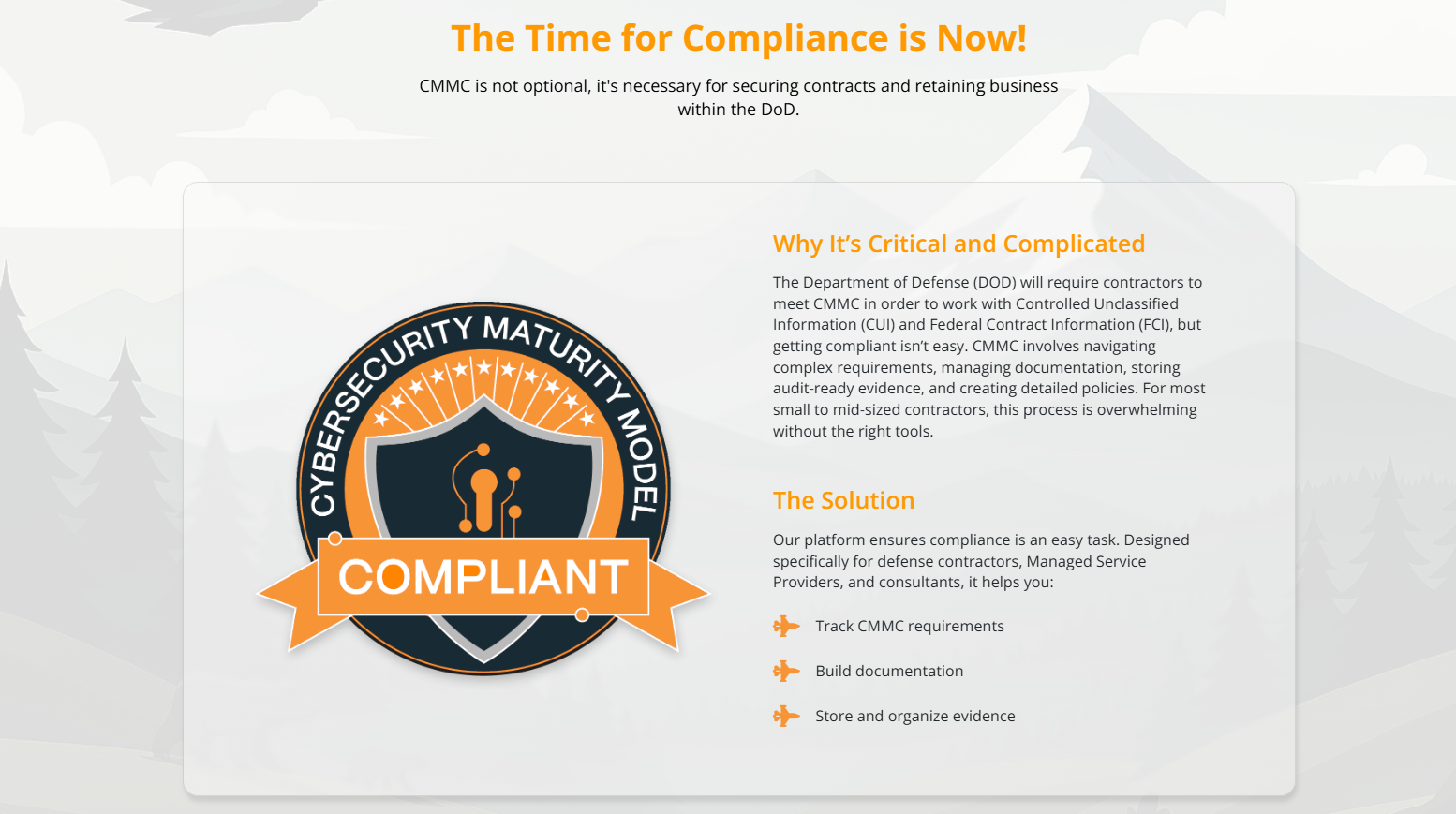
Relying on spreadsheets, file-sharing platforms, task boards, and email threads makes compliance harder to manage than it needs to be.
MotherBear brings your requirements, evidence, SSPs, POA&Ms, tasks, and documentation into one organized workspace.
Whether you are managing your own program or supporting multiple clients, MotherBear helps make compliance easier to track, maintain, and prove.
Book a demo to see how MotherBear can simplify your compliance workflow.
FAQs About NIST 800-171 Compliance Software
What is NIST 800-171 compliance software?
NIST 800-171 compliance software helps organizations manage requirements, evidence, documentation, tasks, SSPs, POA&Ms, and readiness activities in one place.
It replaces manual tracking with a more organized system for managing compliance work.
What is the difference between CMMC and NIST 800-171?
NIST 800-171 defines the security requirements organizations need to follow.
CMMC is the framework used to assess whether those requirements have been implemented properly.
Many software platforms support both because the workflows are closely related.
Can consultants manage multiple clients on one platform?
Yes, some platforms support multi-client management.
This is useful for consultants, MSPs, vCISOs, and advisory firms that need to manage several client programs from one place.
MotherBear is a strong option for this use case.
What NIST 800-171 controls should compliance software help manage?
Effective NIST 800-171 compliance software should help organizations manage security controls related to access control, incident response, configuration management, personnel security, media protection, physical protection, system and communications protection, risk management, and ongoing monitoring activities.
Is a generic GRC platform enough for NIST 800-171 compliance?
It can be, but it requires more setup and customization.
A purpose-built platform is often easier for teams focused specifically on NIST 800-171 and CMMC workflows.