
Table of Contents
Cybersecurity Maturity Model Certification (CMMC) demand is real, but demand doesn’t automatically become a pipeline. Companies looking for CMMC clients usually know the framework, see the contract pressure, and can do the work.
The harder part is getting in front of contractors before they panic-buy help after a clause lands.
The Department of Defense (DoD) is already writing CMMC clauses into new contracts, and every flow-down letter sends another contractor vendor shopping, and most sign with the first credible firm they find.
Consultants, managed service providers (MSPs), and virtual Chief Information Security Officers (vCISOs) that aren’t visible at that moment lose deals to earlier competitors, not better ones.
This guide breaks down the seven channels that produce CMMC consulting business, what each one requires, and where consultants tend to waste time.
TL;DR
- Pursue RPO status early because it signals to cautious contractors and primes that your firm understands the CMMC framework, even though it won't generate leads on its own.
- Treat your Cyber AB Marketplace listing as a buyer verification page: name your regions, the CMMC levels you support, and the exact readiness work you deliver.
- Build a referral pipeline through the people who reach contractors first, including MSP partners, defense industry events, authority content, LinkedIn outreach, C3PAOs, and primes.
- Convert interest by qualifying every inquiry on CMMC level, FCI versus CUI scope, current SPRS and SSP status, the deadline driving the call, and delivery fit.
- MotherBear gives consultants one workspace for requirements, evidence, and assessment prep, turning client acquisition into repeatable CMMC compliance delivery.
Why New CMMC Requirements Create a Consulting Opportunity in 2026
The CMMC consulting market has moved from hypothetical to active buying. Phase 1 of the CMMC program is already putting self-assessment language into new DoD contracts.
Phase 2 will make more third-party assessment work unavoidable for contractors handling Controlled Unclassified Information (CUI). It also pushes consultants to explain the appropriate CMMC level before a buyer commits to the budget.
For firms serving DoD contractors, the bottleneck is attention, not demand.
Three forces are shaping the market right now:
- Contractors need help interpreting CMMC requirements before the award pressure increases.
- Certified Third-Party Assessment Organizations (C3PAOs) conduct the formal assessments, so they need clean consultant handoffs.
- Consultants need repeatable delivery because CMMC compliance work creates documentation for many accounts.
This creates a strong opening for specialists. Prime contractors also enforce CMMC requirements through subcontractor flow-downs, which pull smaller firms into buying cycles earlier.
The tradeoff is that general cybersecurity positioning won’t carry you far. Buyers want proof that you understand Federal Contract Information (FCI), the NIST 800-171 security requirements, and how individual security controls map to evidence.
They also want to know how a CMMC assessment works in practice. Registered Provider Organization (RPO) status can help you show proof before the first sales call.
How to Get CMMC Clients
Explore the seven channels below that will help you find new clients.
1. Get Authorized as an RPO
An RPO is a credibility marker for serious CMMC consulting firms. The Cyber AB defines the role as an organization authorized to provide non-certified CMMC consulting services after agreeing to the ecosystem’s professional conduct rules.
RPO status doesn’t make you a certifier, nor does it guarantee leads. It does tell cautious buyers that your firm understands the CMMC framework and NIST 800-171.
It also shows you know the CMMC process and the line between readiness advice and a formal assessment.
Treat RPO authorization as table stakes if you want larger defense contractors or primes to take you seriously. Smaller firms can still start with gap analysis work, but the stronger play is to pair technical expertise with an ecosystem role.
2. Get Listed on the Cyber AB Marketplace
Your listing works best when you treat it like a buyer verification page, not a replacement for sales. Contractors, primes, and referral partners use it to confirm CMMC status after they hear your name somewhere else.
That means your listing needs more than a logo and email address. Add the regions you serve and the defense supply chain niches you know well.
Name the CMMC level you support most often. Clarify whether you help with self-assessment, CMMC Level 2 certification readiness, or both.
This distinction protects your positioning. Instead of sounding like a firm that can do everything, position around the exact readiness work you can defend: scoping, System Security Plan (SSP) support, gap analysis, evidence prep, or remediation coordination.
3. Partner With MSPs and External Service Providers
Many defense contractors ask their existing MSP for CMMC help before they search for a consultant. That makes MSP partnerships one of the fastest routes into warm accounts.
The partnership model matters. A loose referral agreement may produce names, but a co-delivery model can produce better client outcomes when the MSP owns infrastructure, and your firm owns CMMC compliance process decisions.
Structure the relationship before the first shared client:
- Define who owns scoping, evidence requests, remediation, and project communication.
- Decide whether the engagement is referral, white-label, or co-branded.
- Document conflicts when an MSP becomes part of the client’s compliance boundary.
The watch-out is independence. If the MSP operates client systems that process FCI or CUI, its environment can affect the CMMC compliance requirements. Strong partners welcome that conversation early because surprises at assessment time damage everyone.
External service providers deserve the same clarity. If their work touches sensitive data, the client’s compliance boundary can expand.
Cloud service providers raise a related question: each one needs a defined role, and when security protection data passes through the services provided, the client needs to know what evidence to expect.
4. Do Networking at Defense Industry Events
Defense industry events work because the buyer already has contract stakes in mind.
National Defense Industrial Association (NDIA) chapter meetings, regional defense contractor associations, industry days, and CMMC-focused events put consultants near owners, compliance leads, and primes.
Not every event is worth the time. Broad cybersecurity conferences often produce a weak fit because attendees aren’t always dealing with DoD contracts.
Defense-specific rooms are better because the audience comes from the Defense Industrial Base (DIB) and understands contract eligibility, CMMC requirements, and sensitive government data.
The best event motion is simple: speak, host a small workshop, or bring a practical diagnostic offer. A session on safeguarding federal contract information can beat a generic threat briefing.
Another strong topic is CMMC Level 2 certification assessment prep. NDIA cybersecurity meetings already frame CMMC alongside supply chain risk, cybersecurity standards, and contractor obligations.
5. Build Authority Through Content on Cyber Threats and Compliance
CMMC buyers trust specificity. Content works when it proves you can explain the messy parts of the CMMC compliance journey better than the firms selling vague “readiness” packages.
Useful topics include CMMC Level 2 certification timelines, the Supplier Performance Risk System (SPRS), and NIST 800-171 scoping questions.
A contractor with DoD data needs advice for the next meeting. Content that helps buyers identify gaps before a C3PAO does earn trust, especially when it explains the decisions those security gaps create.
Access control evidence also deserves its own treatment. So do customer responsibility matrix decisions and CMMC audit prep, because both affect the assessment conversation.
Speaking compounds the same effect. A webinar for aerospace suppliers or a short briefing for a regional manufacturing group can outperform months of generic posting. It fits teams that already have practitioner depth but need a visible wedge.
Pick problems tied to real cybersecurity requirements. One session can cover advanced persistent threats; cloud security and disaster recovery deserve sessions of their own. Cybersecurity standards can anchor the policy angle without turning the room into a sales pitch.
6. Activate LinkedIn for Defense Industry Reach
LinkedIn is useful in the DIB because primes, consultants, assessors, and DoD suppliers all track the same cybersecurity requirements and policy changes.
The channel works when your profile says what you do in plain terms: CMMC readiness for contractors that need to protect FCI or CUI.
This clarity matters more than posting volume. Comment on contractor questions, share lessons from anonymized CMMC program work, and connect with compliance leaders after events. Cold outreach can work, but templated messages fall flat in this market.
The better message starts with a specific trigger. Mention an upcoming CMMC level requirement, a prime flow-down concern, or a likely self-assessment gap.
One practical angle is CMMC assessment readiness. Another is how DoD suppliers can avoid waiting until a solicitation forces rushed decisions.
7. Build Referral Relationships With C3PAOs and Prime Contractors
C3PAOs and prime contractors can become high-value referral sources because both see contractors before the consultant does. A C3PAO can’t consult for the same client it assesses, so CMMC readiness work has to go somewhere else.
Prime contractors have a different incentive. They need subcontractors to meet CMMC requirements so programs don’t stall. When a small supplier lacks a compliance program, a trusted consultant can protect the prime’s schedule as much as the subcontractor’s award.
Build these relationships with proof, not vague partnership asks. Bring a sample readiness workflow and show how you define system boundaries.
Then explain how you prepare clients for a third-party assessment and translate NIST 800-171 security requirements into evidence without crossing into assessor work. That gives referral partners confidence that you won’t create cleanup work later.
A C3PAO also wants clean handoff materials. A concise independent assessment report reduces friction before the assessor reviews evidence.
Current CMMC status and clear organization-defined parameters help too. Prime contractors care about those details because weak subcontractor evidence can delay DoD contracts in the defense supply chain.
How to Convert CMMC Assessment Leads at Every CMMC Level
Lead sourcing only matters if the first conversation turns into a scoped engagement. Qualify every inquiry around the same core facts:
- CMMC level: Confirm whether the buyer expects CMMC Level 1, CMMC Level 2, or a higher path.
- Data type: Separate FCI from CUI before pricing the work.
- Current status: Ask for SPRS score, SSP maturity, and known NIST 800-171 gaps in areas like access control.
- Buyer urgency: Ask whether an option year or prime flow-down date is driving the call.
- Delivery fit: Decide whether they need advisory, remediation, provider support, or C3PAO handoff.
Then confirm which CMMC requirements appear in the active solicitation, because the clause language shapes the scope.
Pricing transparency is a real differentiator. A contracting officer may set the deadline, but the consultant sets the decision path. A clear gap assessment offer, a defined readiness package, and a specific proposal timeline make buying easier.
Great customer service starts before the contract is signed. Contractors remember the consultant who can explain the certification assessment path and help them achieve CMMC compliance without hiding the hard parts.
Turn New CMMC Clients Into Repeatable Wins With MotherBear
Getting CMMC clients is the first step. Managing CMMC status, deadlines, evidence sets, SSPs, and Plans of Action and Milestones (POA&Ms) for multiple DoD contracts, while keeping up with ongoing affirmations, is the next one.
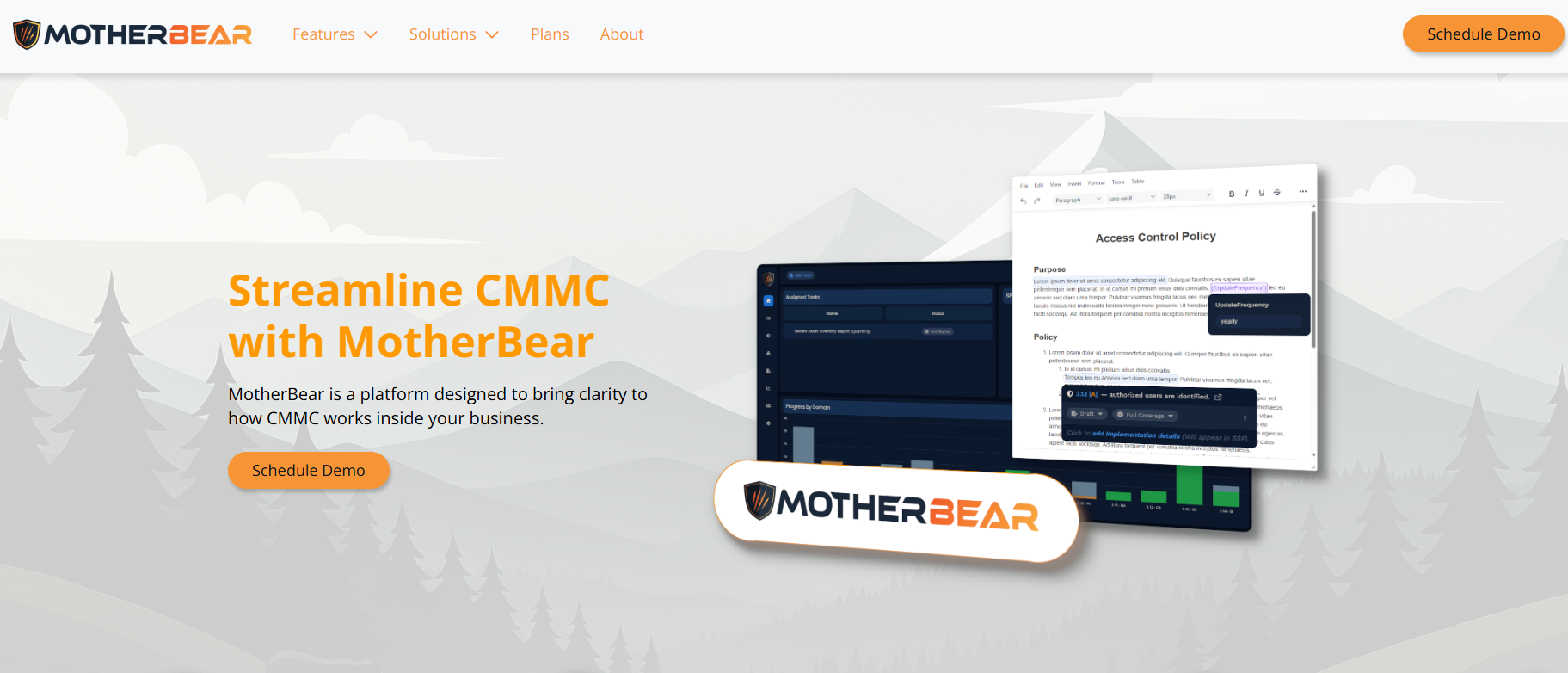
MotherBear gives CMMC consultants a central workspace for CMMC requirements, documentation, evidence, tasks, and assessment preparation.
That helps firms turn hard-won client acquisition into repeatable CMMC compliance delivery instead of another set of disconnected spreadsheets.
Great support matters when a consultant has to keep several clients CMMC-compliant at once. A shared workspace makes it easier to maintain compliance after the sale.
Don’t let delivery chaos erode the trust that won the account. Book a demo and see how MotherBear helps consulting firms manage CMMC client work in one workspace.
FAQs About How Do I Get CMMC Clients
How much does a CMMC-registered practitioner cost?
CMMC professionals can earn high income when they pair framework knowledge with delivery capacity. Consultants with managed service provider or vCISO experience often earn more by packaging recurring CMMC compliance services instead of selling only hourly advisory work.
How much do CMMC consultants make per hour?
A CMMC consultant often costs $200 to $500 per hour, or $15,000 to $150,000 or more for project work. The price depends on CMMC level, environment size, CUI scope, remediation depth, and whether the client needs CMMC assessment prep.
How hard is it to get CMMC?
Earning CMMC is demanding because teams must pair security requirements with evidence discipline to achieve certification.
CMMC Level 1 is the lighter path. Organizations handling CUI for the DoD often need to achieve CMMC Level 2 compliance, which is based on the 110 controls specified in NIST 800-171 and generally involves a third-party evaluation. Staying CMMC-compliant afterward takes ongoing evidence upkeep.