Table of Contents
Buying Cybersecurity Maturity Model Certification (CMMC) help isn't just a software decision. Defense contractors can choose from compliance platforms, security tools, consulting firms, assessment providers, and managed services, all marketed as CMMC services and tools.
Each one solves a different problem, but the confusion hits hardest when a contract deadline is close, and every vendor claims to achieve compliance swiftly.
The pressure is practical, not theoretical, because the Department of Defense (DoD) has published CMMC resources and documentation that outline the program rules, cybersecurity requirements, and assessment guides contractors must follow.
For example, if you pick the wrong category, you can spend budget on a scanner when the real gap is scoping sensitive unclassified information, evidence collection, or a System Security Plan (SSP).
This guide maps what exists, what each category does, and how the pieces support compliance.
TL;DR
- CMMC services and tools handle different tasks. Tools provide teams with systems for tracking controls, evidence, tasks, and safeguards, while services bring in outside expertise for scoping, remediation, assessment, or ongoing support.
- CMMC tools fall into four main categories: compliance management platforms, security and infrastructure tools, documentation and evidence tools, and broader governance, risk, and compliance platforms.
- CMMC services include consulting firms, formal assessment providers, managed service packages, and ongoing support. Each one fits a different point in the readiness, assessment, and maintenance cycle.
- MotherBear acts as the CMMC compliance management hub, helping contractors and consultants keep requirements, evidence, documents, and tasks connected while other tools and services handle their own pieces.
CMMC Tools vs. Services: Cybersecurity Requirements at a Glance
CMMC tools are software solutions your team uses for becoming compliant, while CMMC services are outsourced firms hired for expertise, implementation, assessment, or support.
That distinction matters because tools don’t make decisions for you, and services don’t replace the workspace your team still needs to streamline daily compliance work.
Specialized tools store evidence, track requirements, and manage tasks. On the other hand, services interpret requirements, assess gaps, or guide certification work; and hybrid offerings pair consulting with software.
Most contractors and their clients use both, so the question is which weak point you should address first across governance, protection, documentation, readiness, or ownership. The right mix of resources, practices, and solutions depends on which gap is blocking the contract timeline.
Types of CMMC Tools
CMMC tools are grouped into categories, since each addresses a different control problem and rarely covers the others.
Compliance Management Platforms
Compliance management platforms give teams a focal point for mapping CMMC requirements, assigning owners, collecting artifacts, and preparing assessment materials.
A CMMC program aligns faster when controls, tasks, evidence, and documentation live in one system rather than scattered spreadsheets, since a shared workspace can enforce ownership and review cycles that loose files cannot.
MotherBear fits here as a CMMC-focused option, with requirements tracking built around assessment objectives and ownership. Book a demo now and learn how the platform works.
Hyperproof and similar platforms also serve this category, though not every platform is built only for CMMC across reviews and renewal cycles.
The features you should look for are requirement-to-evidence mapping, owner assignment, document version control, and audit trails that protect information integrity from the first control through the final affirmation.
Security and Infrastructure Tools
Security and infrastructure tools implement the technical controls themselves. This category includes endpoint, media and physical protection, incident report, secure encryption, and system and communications protection, which together provide the basic safeguarding the DoD expects for federal contract data.
Teams use these tools to detect and remediate vulnerabilities before potential threats turn into incidents that show up in an assessment finding.
The trade-off is scope, since these tools protect sensitive data but don't prove the full program is assessment-ready without documentation, control owners, and review records. Audit proof still sits elsewhere for most teams.
Documentation and Evidence Tools
Documentation and evidence tools help teams build the SSP, maintain a Plan of Action and Milestones (POA&M), and organize proof by requirement.
Some products are standalone templates or trackers, while stronger setups connect documentation directly to mapped evidence and surface the key areas where artifacts are missing.
MotherBear’s evidence repository is an example of that connected model for assessment prep before assessor review. That connection matters because assessors don’t just want files; they want artifacts tied to the right control, current implementation statement, and remediation status.
When teams compare possible solutions in this category, the deciding factor is usually how tightly evidence binds to the requirement it supports.
Governance, Risk, and Compliance Platforms
Governance, risk, and compliance (GRC) platforms cover multiple frameworks, often including CMMC and Federal Risk and Authorization Management Program (FedRAMP) work.
Vanta, Drata, and Sprinto are common examples, and this category fits teams that manage several standards at once and want shared workflows.
The trade-off is depth, since a broad GRC platform may help with governance and automated evidence collection, but a CMMC-only team may prefer a purpose-built workspace that follows NIST 800-171, assessor expectations, and POA&M detail during formal reviews.
Types of CMMC Services
CMMC services cover the human side of the defense industrial base. They speed up hard decisions, but ownership stays with the contractor.
CMMC Consulting Firms
CMMC consulting firms help contractors interpret the scope, run a gap analysis, document current controls, and fix weaknesses before assessment.
Most engagements start with an initial assessment that benchmarks current practice against NIST 800-171 and produces a clear picture of what it will take to achieve compliance on a realistic timeline.
Registered Provider Organizations (RPOs) sit in this category when they operate inside the Cyber AB ecosystem, and BPM, MAD Security, Systems Engineering, and Centre Technologies are examples of firms that operate in the market.
That outside perspective brings valuable insights when teams need help turning CMMC controls into tasks, policies, owners, evidence requests, and realistic remediation plans.
CMMC Level 2 Assessment Services
Certified Third-Party Assessment Organizations (C3PAOs) perform formal CMMC Level 2 certification assessments when a contract requires third-party validation.
Authority is the dividing line, since only authorized C3PAOs can conduct CMMC assessments for certification, and A-LIGN, Schellman, and similar firms fall into this category.
Contractors shouldn’t treat assessors like consultants, because independence matters. Use pre-assessment support first, then engage the C3PAO when the environment and evidence set are ready, since they issue the status decision, not the readiness advice your team may want.
CMMC-as-a-Service Companies
Managed service providers (MSPs), managed security service providers (MSSPs), and CMMC-as-a-service (CaaS) packages take on parts of the operating environment.
These services include secure enclaves, monitoring, endpoint management, or a managed Microsoft 365 government cloud setup, which is often where sensitive unclassified information shared with subcontractors and primes actually lives.
The appeal is speed and accountability for smaller organizations without internal security teams, while the risk is dependency, since contractors still need to understand inherited responsibilities, data flows, and what the provider will provide in the assessment package.
Ongoing CMMC Compliance Support
Ongoing support covers the work after the certificate or self-assessment. Continuous monitoring, policy updates, risk assessment refreshes, and Supplier Performance Risk System (SPRS) score support all live here.
This category gets less attention than the initial push, but it’s often where programs succeed or decay, because CMMC certification is a point-in-time result while compliance is the operating rhythm of continuous improvement that keeps the result defensible between reviews and contracts.
How to Choose a CMMC Tool or Service for You
Where you are in the compliance-obtaining process should drive the mix, not the loudest sales pitch. Map the stage before buying:
- Pre-readiness: Use consulting and gap tools to define systems, Federal Contract Information (FCI), and Controlled Unclassified Information (CUI).
- Active prep: Pair a compliance platform with safeguards and consulting.
- Pre-assessment: Test documentation and evidence with an RPO or mock assessment.
- Assessment: Engage a C3PAO for Level 2, or the Defense Industrial Base Cybersecurity Assessment Center (DIBCAC) for Level 3.
- Post-certification: Keep monitoring, ownership reviews, and annual affirmations in one workspace.
Buying everything at once creates more administration, not increased assurance. Stage discipline beats tool sprawl.
Keep CMMC Resources Together With MotherBear
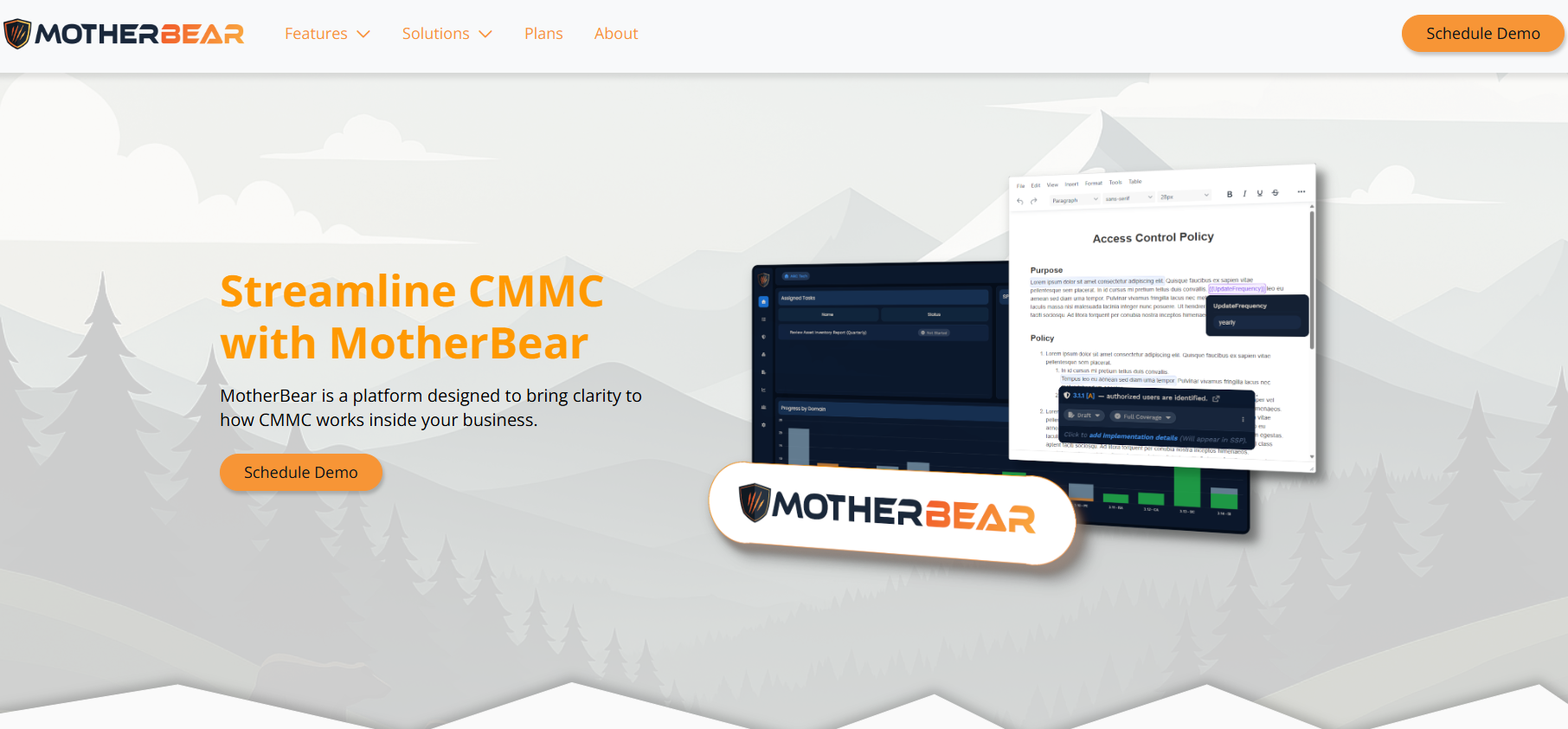
The CMMC ecosystem is fragmented, with different tools and services covering parts of the journey. MotherBear gives defense contractors, MSPs, and CMMC professionals one hub for requirements, evidence, documents, and tasks.
That hub matters when contractors use consultants, security platforms, and assessors at the same time. Don’t let evidence gaps cost you a contract: book a demo with MotherBear and bring CMMC work into one shared workspace so your team can see what’s done and what’s next.
FAQs About CMMC Services and Tools
What’s the difference between CMMC tools and CMMC services?
Cybersecurity Maturity Model Certification (CMMC) tools are software used to manage controls, documentation, evidence, or security tasks. CMMC services provide consulting, managed security, or formal assessment support.
Do I need both tools and services, or just one?
Most Department of Defense (DoD) contractors need both. Tools run the program, while services support scoping, gap analysis, remediation, or certification.
What CMMC tools are required for Level 2 compliance?
Cybersecurity Maturity Model Certification (CMMC) Level 2 doesn’t require one stack. Contractors need access control, vulnerability management, secure file sharing, incident response, and evidence collection for Controlled Unclassified Information (CUI) scope, so the right CMMC services and tools depend on your environment.