---
title: "Hyperproof vs Drata: Which Platform Fits Your Program?"
description: Read our Hyperproof vs Drata review and find out how the two platforms compare. Discover what makes MotherBear the superior alternative for CMMC.
image: https://www.motherbearsecurity.com/hubfs/blog-hyperproof-vs-drata.png
---
[](https://www.motherbearsecurity.com/)
- Features
- [Requirements Tracking Understand how and why you meet requirements](https://www.motherbearsecurity.com/features/requirements-tracking)
- [Documentation Builder Tools to streamline creating Policies, Procedures and your SSP](https://www.motherbearsecurity.com/features/documentation-builder)
- [Evidence Repository Store evidence with ease and ensure you are audit ready](https://www.motherbearsecurity.com/features/evidence-repository)
- [Task Management Assign, track, and manage tasks across your team](https://www.motherbearsecurity.com/features/task-management)
- Solutions
- [For Defense Contractors Purpose built for the Defense Industrial Base](https://www.motherbearsecurity.com/solutions/defense-contractors)
- [For Managed Service Providers Simplify program management for you and your clients](https://www.motherbearsecurity.com/solutions/managed-service-providers)
- [For CMMC Professionals Use tools that help you provide the best value to your clients](https://www.motherbearsecurity.com/solutions/cmmc-professionals)
- [Plans](https://www.motherbearsecurity.com/plans)
- [About](https://www.motherbearsecurity.com/about)
[Schedule Demo](https://www.motherbearsecurity.com/schedule-demo)
# Hyperproof vs Drata: Which Platform Fits Your Program?
August 12, 2026

## Table of Contents
- [TL;DR](https://www.motherbearsecurity.com/blog/hyperproof-vs-drata#tldr)
- [Hyperproof vs Drata vs MotherBear at a Glance](https://www.motherbearsecurity.com/blog/hyperproof-vs-drata#Hyperproof-vs-Drata-vs-MotherBear-at-a-Glance)
- [What Is Drata?](https://www.motherbearsecurity.com/blog/hyperproof-vs-drata#What-Is-Drata)
- [What Is Hyperproof?](https://www.motherbearsecurity.com/blog/hyperproof-vs-drata#What-Is-Hyperproof)
- [What Is MotherBear?](https://www.motherbearsecurity.com/blog/hyperproof-vs-drata#What-Is-MotherBear)
- [How the Platforms Compare](https://www.motherbearsecurity.com/blog/hyperproof-vs-drata#How-the-Platforms-Compare)
- [Which Is the Right Platform for You?](https://www.motherbearsecurity.com/blog/hyperproof-vs-drata#Which-Is-the-Right-Platform-for-You)
- [Bring Your CMMC Program Into One Place With MotherBear](https://www.motherbearsecurity.com/blog/hyperproof-vs-drata#Bring-Your-CMMC-Program-Into-One-Place)
- [FAQs About Hyperproof vs Drata](https://www.motherbearsecurity.com/blog/hyperproof-vs-drata#faq)
Most teams comparing Hyperproof vs Drata are really asking a different question: how complicated is our compliance program going to get?
Both platforms automate the same core compliance processes. They connect to your systems, collect evidence, monitor controls, and get you ready for an audit. The difference shows up in who they were designed for.
Drata is best known for structured automation and fast audit readiness, though its platform now reaches into enterprise governance too. Hyperproof starts from the opposite direction, with compliance operations and risk management at the center. Pick the wrong one and you either outgrow it or pay for capability you never use.
There’s also a third use case where a more niche platform may fit better: defense contractors and consultants whose programs are driven by [DoD contracts](https://www.motherbearsecurity.com/blog/dod-cmmc-requirements) rather than customer security reviews.
## **TL;DR**
- Drata suits startups and mid-market teams that want fast automation, an intuitive interface, and a short path to SOC 2 or ISO 27001.
- Hyperproof suits larger compliance operations managing multiple frameworks, deeper risk work, and complex requirements that outgrow lighter compliance tools.
- Both cover the same commercial ground: automated evidence collection, continuous monitoring, control mapping, and audit readiness.
- Both offer dedicated [Cybersecurity Maturity Model Certification](https://www.motherbearsecurity.com/blog/what-is-cmmc-compliance) (CMMC) and [NIST 800-171](https://www.motherbearsecurity.com/blog/what-is-nist-800-171) capabilities, not just a framework listing, so the real question for defense work isn't coverage. It's whether the whole product is organized around it.
- [MotherBear](https://www.motherbearsecurity.com/schedule-demo) is the purpose-built option for CMMC and NIST 800-171, including multi-client organization for consultants running programs for many contractors.
## **Hyperproof vs Drata vs MotherBear at a Glance**
Here's how the three compare on the dimensions that usually decide it:
|  | **Drata** | **Hyperproof** | **MotherBear** |
| --- | --- | --- | --- |
| **Built for** | Automated compliance and customer trust programs | Mature compliance and risk operations | CMMC contractor and consultant programs |
| **CMMC approach** | Dedicated CMMC capabilities inside a broader platform | Dedicated CMMC program inside a broader Governance, Risk, and Compliance (GRC) platform | CMMC-centered product design |
| **Consultant support** | Multi-instance tools for service providers and virtual CISOs | Partner and advisory workflows | Contractor programs, communication, and reporting in one workspace |
| **Main strength** | Automation and continuous readiness | Risk, framework, and program depth | Focused CMMC program management |
## **What Is Drata?**
Drata is a compliance automation platform that removes the manual work that used to take weeks before every audit. It connects to your cloud services, runs continuous checks against your configuration, and collects evidence without anyone taking screenshots.
What Drata offers is structured automation and fast operational visibility. Pre-mapped programs, integrations, continuous tests, and guided workflows reduce the work of launching and maintaining a compliance program.
A Trust Center gives prospects a self-serve view of your compliance posture, which is part of why Drata lands well in questionnaire-heavy sectors like finance and healthcare.
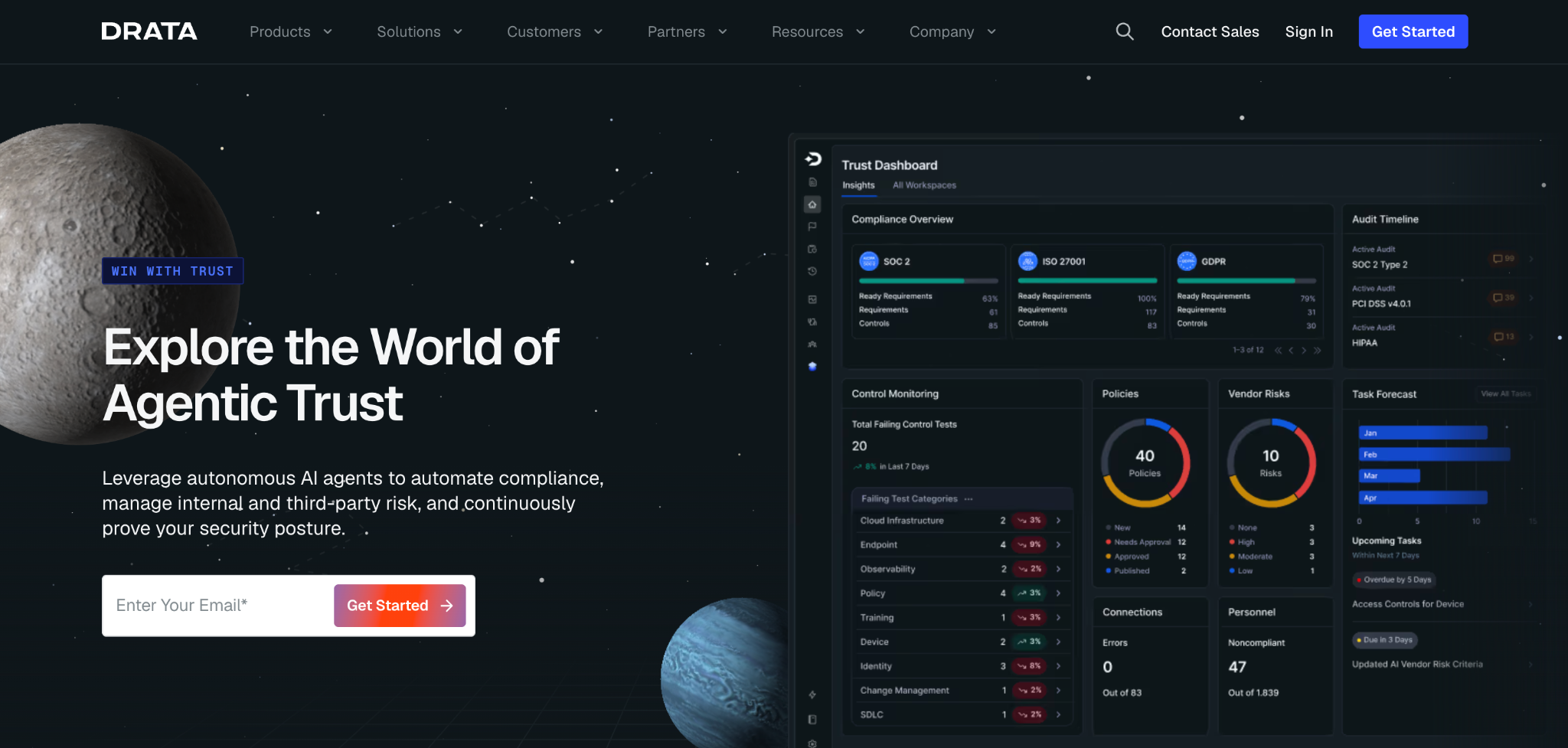Image source: drata.com
### **Drata's Strengths**
The following aspects come up consistently when teams explain why they chose it:
- **Compliance automation that reduces implementation work:** Pre-built framework programs, automated evidence collection, and real-time alerts when a control drifts mean less manual effort from day one.
- **An intuitive interface:** Drata is widely rated for ease of use, and its onboarding gets specific praise from reviewers. For new users, that matters more than a feature checklist.
- **A large integration library:** Hundreds of connections reach cloud providers, identity and access systems, developer tools, and business applications, so the automated tests cover your environment rather than half of it.
### **Drata Limitations**
Every platform has limitations, and Drata's follow from its strength.
Standardized automation is what it does best, so organizations with complex internal governance, heavy regulatory compliance obligations, or deeply tailored risk workflows should compare its advanced tiers carefully against broader governance, risk, and compliance (GRC) platforms.
Costs also climb with frameworks and modules. Teams adding their third or fourth program should model total cost before committing, because the entry price and the eventual price can look very different.
## **What Is Hyperproof?**
Hyperproof is a compliance operations platform that treats compliance as an ongoing function rather than a series of audits.
Its design assumes you're running several programs at once and need to see how they overlap, which is why it typically fits mid-market and enterprise organizations with dedicated compliance functions.
That makes it a GRC platform in the more complete sense. Risk registers, control mapping, and program-level reporting sit alongside the audit machinery rather than behind it.
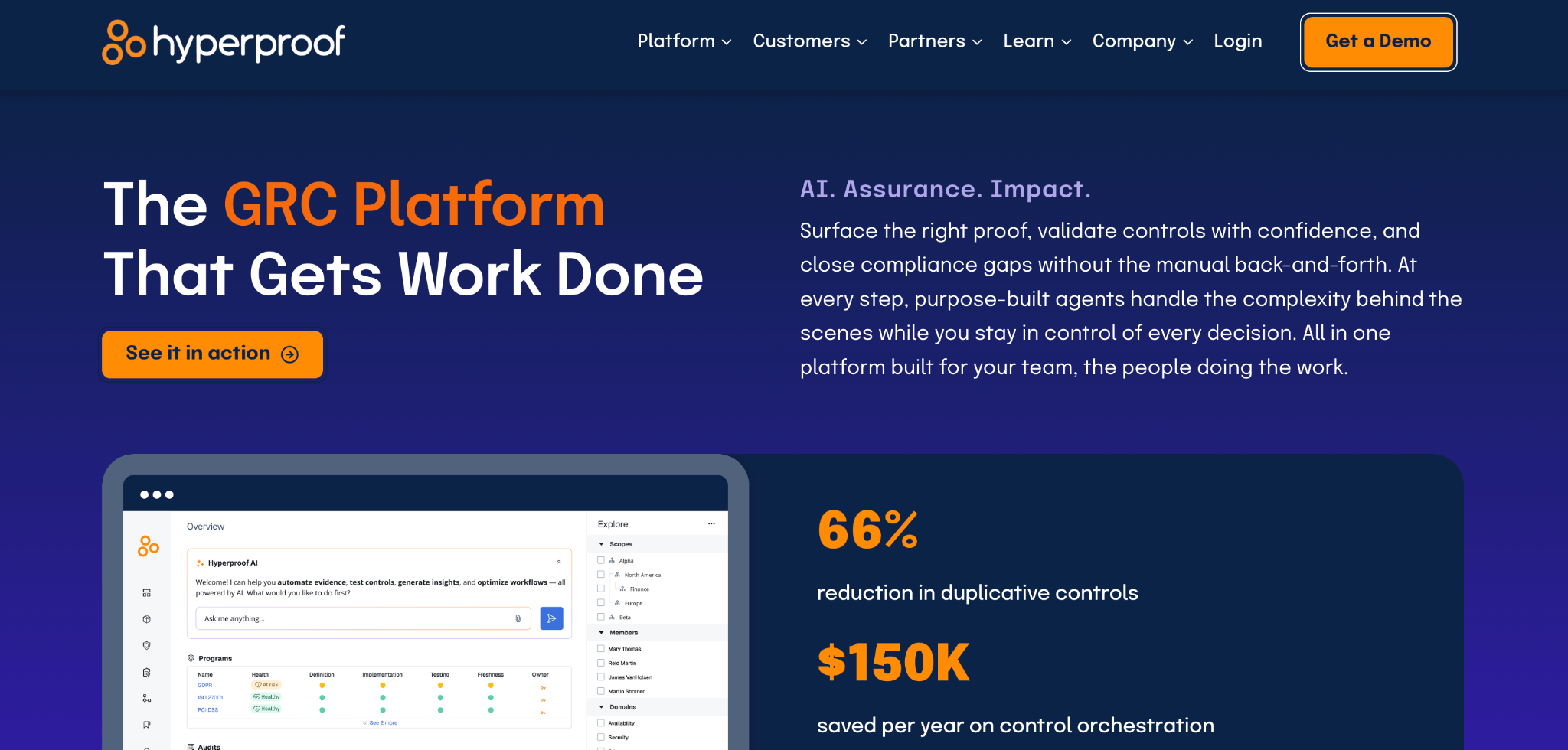Image source: hyperproof.io
### **Hyperproof's Strengths**
Its advantages show up once a program grows past a single framework:
- **Multiple frameworks without duplicated work:** Strong control mapping means one control satisfies requirements in several frameworks, so compliance work compounds instead of repeating.
- **Risk management built in:** Risk assessments connect to the controls that address them, which suits organizations whose leadership wants risk visibility rather than a certificate.
- **Program-level reporting:** Dashboards aimed at compliance leaders show where every program stands, which is the view you need once you're managing more than a couple.
### **Hyperproof Limitations**
The breadth brings a learning curve. Some reviewers report that navigation and initial setup take time to learn, while others describe implementation as straightforward and praise the support they received.
It's also more platform than a small team needs. If your company manages one framework with two people, the program-management layer is overhead rather than advantage.
## **What Is MotherBear?**
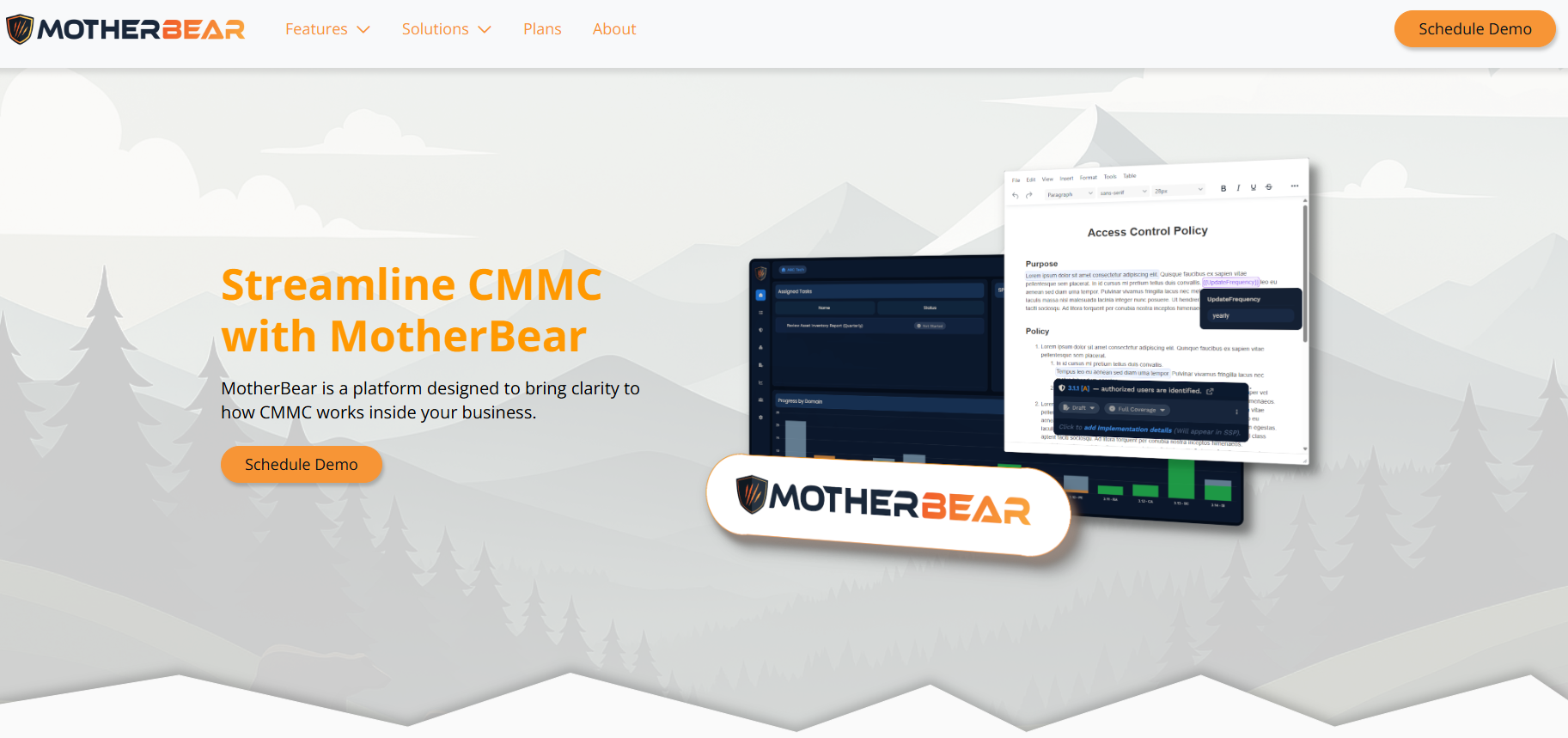
[MotherBear](https://www.motherbearsecurity.com/) is [CMMC compliance software](https://www.motherbearsecurity.com/blog/cmmc-compliance-software) rather than a general compliance solution. It doesn't try to cover every framework, which is exactly why it fits defense work better than a platform that does.
The workspace is organized around one program: requirement status against [NIST 800-171](https://www.motherbearsecurity.com/blog/what-is-nist-800-171), an [evidence repository](https://www.motherbearsecurity.com/features/evidence-repository) tied to the requirements each artifact proves, System Security Plan (SSP) and policy materials, remediation work, and assessment readiness in one view.
### **MotherBear's Strengths**
The focus pays off in the following places that matter for defense work:
- **A workspace shaped like the assessment:** Requirements, evidence, and documentation sit in the structure an assessor reviews them in, so preparation is a readout rather than a reconstruction.
- **Multi-client organization:** Drata and Hyperproof both support service-provider use cases. MotherBear differs in where they sit: separate contractor programs, CMMC requirement tracking, client communication, and readiness reporting are the product's center rather than a layer within a broader GRC platform.
- **One regime in one workspace:** Requirement status, evidence, documentation, remediation, and assessment readiness stay connected inside the same CMMC program.
### **When MotherBear Is the Right Choice**
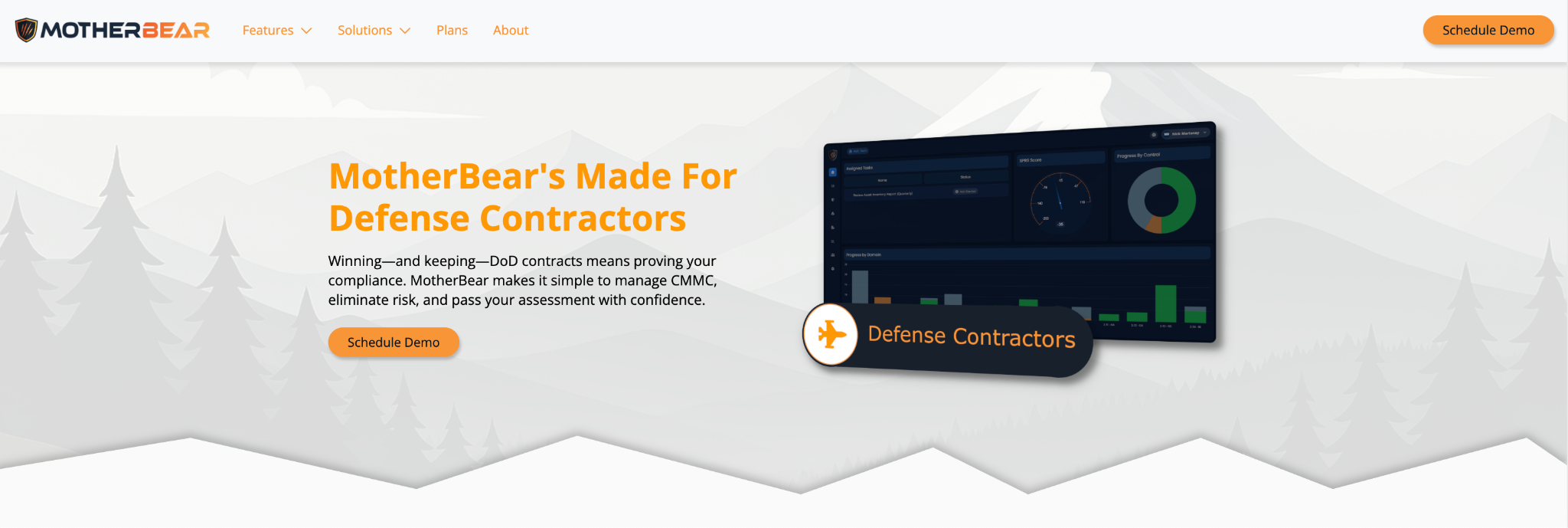
If your contracts carry [CMMC requirements](https://www.motherbearsecurity.com/blog/who-needs-cmmc), if an assessor one day traces your evidence back to individual requirements, or if you advise contractors on readiness for a living, MotherBear is built for exactly that work.
The same applies to consultancies weighing whether a general platform can stretch. Once you manage programs for more than a handful of contractors, purpose-built beats adapted.
## **How the Platforms Compare**
Let’s take a closer look at how these platforms work.
### **Compliance Automation**
On automated evidence collection, Drata and Hyperproof do the same fundamental job. Connectors pull evidence from your systems, controls are tested continuously, and failures surface as alerts.
Drata leans toward automating the path to a certification. Hyperproof leans toward automating the operation of a compliance program. That distinction sounds academic until you're maintaining ten frameworks and need to know which controls serve which.
MotherBear focuses on a different operational goal: keeping CMMC requirements, evidence, documentation, remediation, and readiness connected in one program.
### **Continuous Compliance and Monitoring**
Continuous compliance is the shared promise: controls checked on an ongoing basis so problems surface between audits rather than during them. Staying compliant year-round is cheaper than proving it from scratch each cycle.
Drata's continuous monitoring emphasizes speed and clarity, alerting the people who own the fix. Hyperproof's emphasizes oversight, feeding program-level views that support continuous improvement over time.
For CMMC, what has to stay current is the link between each requirement and its supporting evidence. MotherBear keeps requirement status, evidence, documentation, and [CMMC readiness](https://www.motherbearsecurity.com/blog/cmmc-readiness) connected as the program changes.
### **Risk Management and Reporting**
This is where the platforms separate most clearly. Drata has integrated risk management with risk registers, custom risks, scoring, and governance dashboards. Hyperproof puts risk management and compliance operations at the core of the product rather than beside it.
Hyperproof is usually the stronger choice when leadership needs several risk registers, complex control relationships, broad framework mapping, and program-level reporting in one place.
Drata is usually the stronger choice when automation, continuous testing, and customer assurance drive the program, and risk reporting supports that work rather than leading it.
For CMMC, the reporting that matters is narrower: requirement status, open remediation, and whether the evidence behind each requirement is current. That's the view MotherBear is built to produce.
### **Framework Coverage: SOC 2, ISO 27001, and Beyond**
Between them, Drata and Hyperproof cover SOC 2, ISO 27001, HIPAA, GDPR, the Payment Card Industry Data Security Standard (PCI DSS), the CIS Controls, NIST frameworks, and custom requirement sets.
Hyperproof provides the broader out-of-the-box library of compliance frameworks and deeper cross-framework program management.
Drata covers the major commercial frameworks and supports custom ones on its more advanced plans, with greater emphasis on automated readiness and control monitoring.
Both also offer dedicated CMMC and NIST 800-171 capabilities. That's worth knowing, because it means the defense-contracting question isn't answered by comparing framework lists. It's answered by what the product is organized around.
## **Which Is the Right Platform for You?**
Whichever way you lean, ask what support comes with the plan. Strong support during rollout is often worth more than a feature you'll never use.
Budget for the work around the platform, too. Auditors are a separate cost, and rolling either tool out involves change management that your compliance goals depend on.
- **Choose Drata** if you're a startup or mid-market team pursuing a few certifications, you want compliance tasks automated quickly, and nobody on staff does compliance full time.
- **Choose Hyperproof** if you have a compliance function, run several frameworks, need risk management and compliance workflows in the same system, and value program visibility over speed. Its advanced features earn their keep once programs run in parallel.
- **Choose MotherBear** if your obligations come from defense contracts. Both other platforms are strong compliance tools built around commercial security workflows, and CMMC works differently.
### **When Your Compliance Program Is CMMC**
Defense compliance has machinery the commercial frameworks don't share. Contractors must comply with NIST 800-171, and a NIST 800-171 assessment turns that into a score with weighted deductions.
That score goes into the Supplier Performance Risk System (SPRS) with an executive affirmation behind it.
Compliance documentation works differently too. An SSP describes implementation requirement by requirement, and [objective evidence](https://www.motherbearsecurity.com/blog/cmmc-objective-evidence) has to trace to individual assessment objectives the way an assessor reads them.
This matters more since the [July 13, 2026 suspension of CMMC Phase 2](https://www.war.gov/News/Releases/Release/Article/4542329/forging-the-arsenal-of-freedom-department-of-war-suspends-cmmc-phase-ii-require/).
Phase 1 self-assessment requirements remain in force, and the Department continues selected government-led assessments during its review, which puts the weight on the accuracy of what contractors document themselves.
Consultants carry a version of this problem at scale. A virtual CISO or [managed service provider](https://www.motherbearsecurity.com/blog/cmmc-for-msps) running programs for 30 contractors needs separation between clients, a view over all of them, and requirement-level detail for each.
## **Bring Your CMMC Program Into One Place With MotherBear**
If your compliance requirements come from defense contracts, the platform question changes shape. The work isn't proving trust to prospects. It's proving to the government that every requirement is implemented, documented, and evidenced.
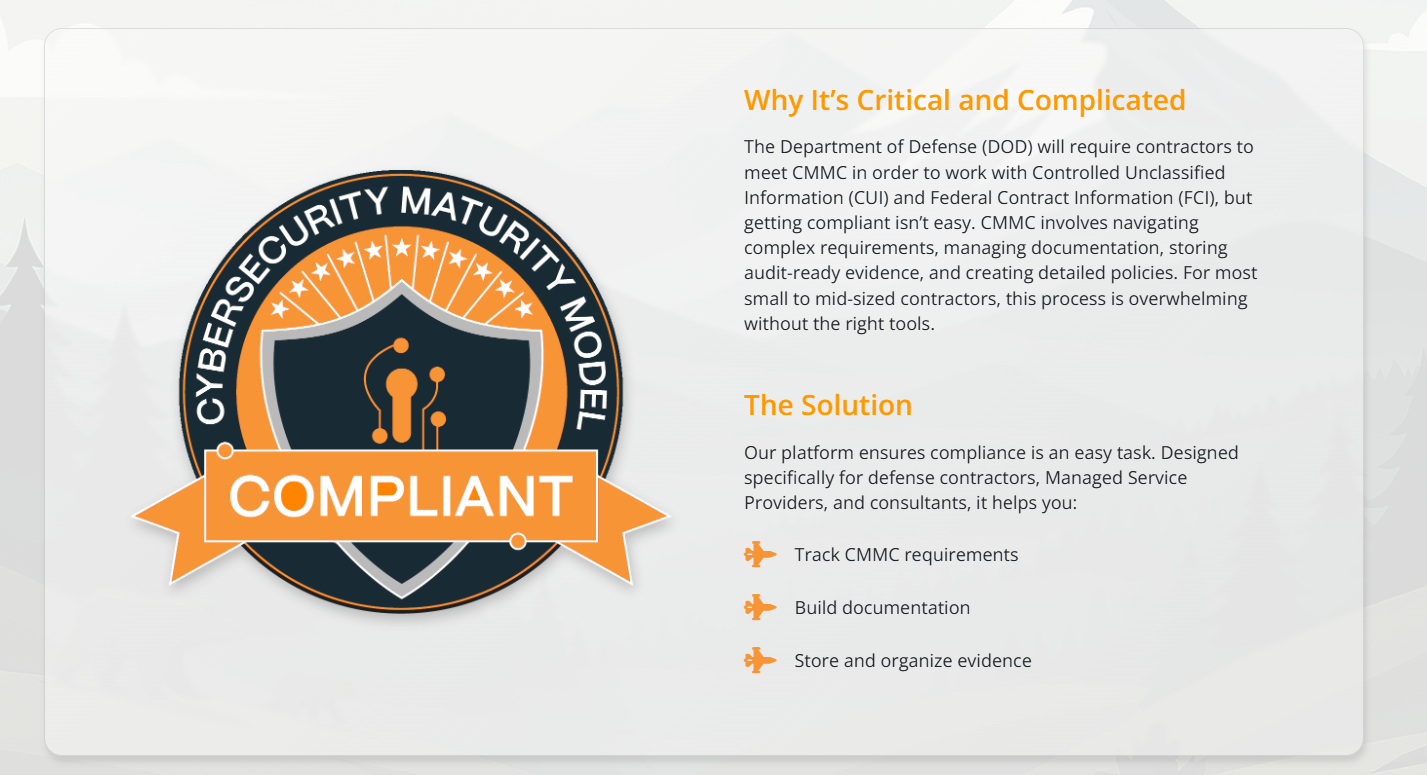
[MotherBear](https://www.motherbearsecurity.com/) gives defense contractors and their consultants a central place to manage requirement status, evidence, SSP and policy materials, remediation work, assessment readiness, and client reporting.
For a defense contractor, that means the platform matches how the assessment actually works. For a consultant, it means adding clients without adding systems.
[***Book a demo and see how MotherBear handles CMMC for one contractor or 30.***](https://www.motherbearsecurity.com/schedule-demo)
## **FAQs About Hyperproof vs Drata**
### **Who competes with Drata?**
Drata's closest competitors are Vanta, Sprinto, and Secureframe in commercial compliance automation, with Hyperproof, Scrut Automation, and LogicGate competing on broader GRC capability. OneTrust competes from the privacy side.
### **Is Hyperproof a GRC tool?**
Yes. Hyperproof covers governance, risk, and compliance rather than compliance alone, with risk registers, risk assessments, and program management alongside framework support. That's the main structural difference from lighter compliance automation tools, and it's why it fits organizations with dedicated compliance teams.
### **Is Drata better than Vanta?**
Neither is universally better. Both automate evidence collection, monitor controls continuously, and support multiple frameworks from one control set. Your integrations, frameworks, service model, and budget decide it, so run both through your own environment rather than comparing feature lists.
### **Is MotherBear a Drata alternative?**
For defense contractors, yes. Drata and MotherBear solve different problems: Drata automates commercial compliance programs, while MotherBear is built around CMMC and NIST 800-171 program management.
If your obligations come from DoD contracts rather than customer security questionnaires, MotherBear covers the workflow you actually need. Companies carrying both kinds of obligations sometimes run one of each.
### **Can Drata or Hyperproof handle CMMC?**
Yes. Both offer dedicated CMMC capabilities rather than framework listings alone, including control management, automated evidence collection, readiness tracking, and CMMC-specific documentation or reporting.
MotherBear differs in product focus: it centers CMMC program management, contractor communication, and multi-client organization rather than placing CMMC inside a larger framework library. Compare them on that difference rather than on coverage.
## Need to Manage a Compliance Program?
Book a demo of MotherBear to see how we streamline compliance
[Schedule Demo](https://www.motherbearsecurity.com/schedule-demo)
## Read On
[](https://www.motherbearsecurity.com/blog/cmmc-assessment-guide)
### [CMMC Assessment Guide: What to Expect and How to Prepare](https://www.motherbearsecurity.com/blog/cmmc-assessment-guide)
Not every Cybersecurity Maturity Model Certification (CMMC) assessment follows the same process....
[](https://www.motherbearsecurity.com/blog/cmmc-level-1-vs-level-2)
### [CMMC Level 1 vs Level 2: Key Differences and How to Choose](https://www.motherbearsecurity.com/blog/cmmc-level-1-vs-level-2)
Choosing between CMMC Level 1 vs Level 2 is one of the first decisions defense contractors face...
[](https://www.motherbearsecurity.com/blog/cui-vs-fci)
### [CUI vs FCI: 2026 Guide](https://www.motherbearsecurity.com/blog/cui-vs-fci)
Most contractors can recite the difference between Controlled Unclassified Information (CUI) and ...

#### Pages
[Home](https://www.motherbearsecurity.com)
[Plans](https://www.motherbearsecurity.com/plans)
[About](https://www.motherbearsecurity.com/about)
[Blog](https://www.motherbearsecurity.com/blog)
#### Features
[Requirements Tracking](https://www.motherbearsecurity.com/features/requirements-tracking)
[Documentation Builder](https://www.motherbearsecurity.com/features/documentation-builder)
[Evidence Repository](https://www.motherbearsecurity.com/features/evidence-repository)
[Task Management](https://www.motherbearsecurity.com/features/task-management)
#### Solutions
[For Defense Contractors](https://www.motherbearsecurity.com/solutions/defense-contractors)
[For Managed Service Providers](https://www.motherbearsecurity.com/solutions/managed-service-providers)
[For CMMC Professionals](https://www.motherbearsecurity.com/solutions/cmmc-professionals)
---
© 2026 Mother Bear Security, Inc. All rights reserved.
Privacy Policy
```json
{
"@context" : "https://schema.org",
"@type" : "BlogPosting",
"author" : {
"@type" : "Person",
"name" : "Nick Marteney",
"url" : "https://www.motherbearsecurity.com/blog/author/nick-marteney"
},
"dateModified" : "2026-08-12T22:33:14.602Z",
"datePublished" : "2026-08-12T22:33:14.000Z",
"headline" : "Hyperproof vs Drata: Which Platform Fits Your Program?",
"image" : [ "https://www.motherbearsecurity.com/hubfs/blog-hyperproof-vs-drata.png" ],
"mainEntityOfPage" : {
"@id" : "https://www.motherbearsecurity.com/blog/hyperproof-vs-drata",
"@type" : "WebPage"
},
"publisher" : {
"@type" : "Organization",
"logo" : {
"@type" : "ImageObject",
"url" : "https://www.motherbearsecurity.com/hubfs/mbs-logo-transparent-h128.png"
},
"name" : "Mother Bear Security"
}
}
```